GEOPOLITICA
The Zacharia Incident: An Image Episode, Not a Shift in Policy Toward China
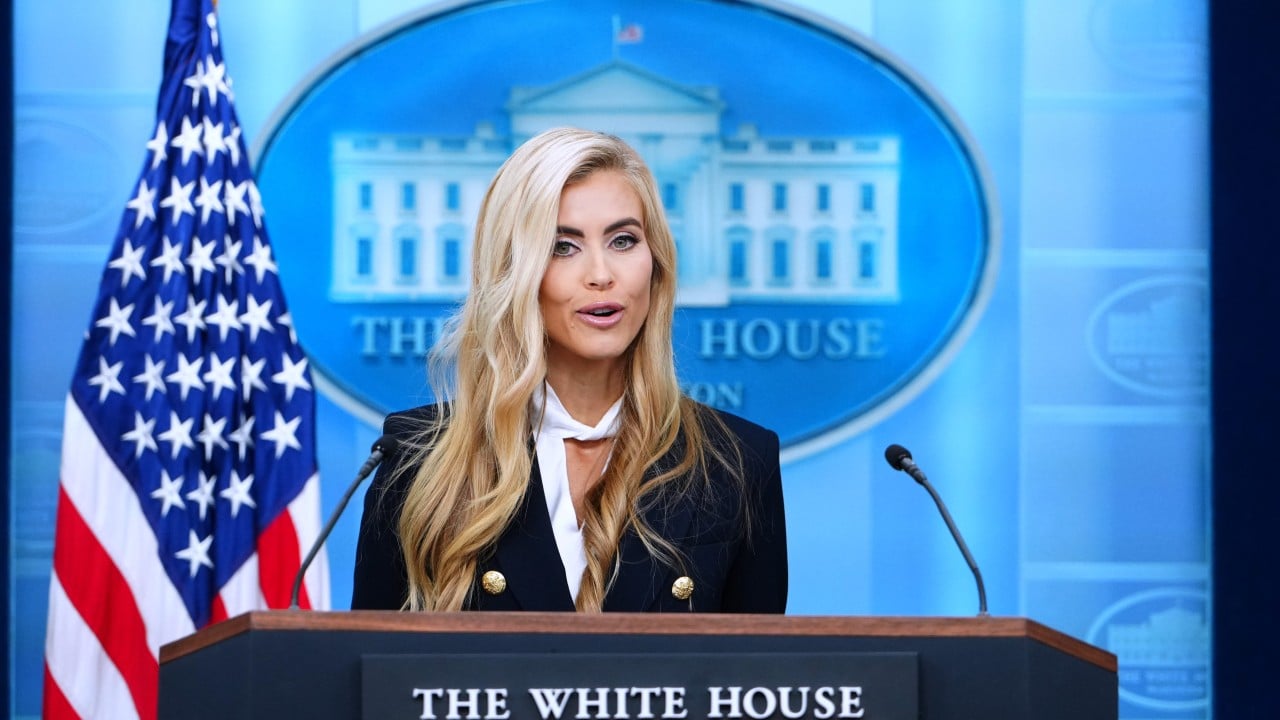
The new White House spokesperson, Katie Zacharia, was asked during a briefing where she had graduated from the Bar and answered, according to Antena 3 CNN, "in China". The incident was presented as a question of the official's credibility, not as a foreign policy decision.
The stakes are modest but clear. For the White House, the immediate cost is reputational and centers on the person conducting the briefing. For Romania, the sources listed contain no signal that Washington's relationship with Beijing would change because of this episode. The dominant scenario, with an internal probability estimate of approximately 70%, is an episode without strategic change, and the thesis of this article is that the image scandal should not be read as an indication of a new foreign policy line.
1. What actually happened
The available reports describe the same sequence of facts. Zacharia, named spokesperson shortly after taking office, was subjected to questions about her legal career. According to Adevărul, she acknowledged that she had not passed the bar examination necessary to practice as a lawyer in the United States, although she had presented herself as a lawyer. HotNews.ro, citing AFP and The Guardian, notes that she had been suspected of having "inflated" her CV, which we cannot confirm from the full text of those agencies' reports, which lies outside our source.
The phrase "in China" is attributed by several publications, but the full transcript of the briefing has not been verified by us, so we render the quote as attributed by the cited sources, not as a certified transcription. Antena 3 CNN reports that, in a previously broadcast podcast, Zacharia reportedly described her belief that the United States would be overtaken by China before Donald Trump became president; this claim has not been confirmed from the primary source of the podcast.
So what can be established from the sources? That a communications official was put on the spot by questions about her CV, and that her answer produced an embarrassing moment. What cannot be established: the White House's intention to change its line toward China, or the existence of a decision in that direction.
2. Actors' interests and motives
The central actor is the Trump administration, which has a declared interest in projecting firmness toward China, but this does not automatically translate into an interest in communicating about China through the spokesperson. The institution's undeclared motives concern its image of competence, not the substance of the bilateral relationship.
Zacharia has an interest in protecting her career and credibility. The sources do not describe a decision-making role for her in China policy, so her influence on the relationship is, on the available data, negligible. Trump is mentioned in the sources as a reference point of the podcast and of the 2016 context, but there is no recent statement by him about the incident in the listed texts.
Several domestic constraints are relevant. The congressional electoral calendar, scheduled for November 3, 2026, creates an incentive for the administration to present an image of rigor, but the date must be confirmed from the official source of the electoral commission. Electoral pressure means that any image episode is amplified in debate, without this indicating a substantive change.
3. The mechanism: from gaffe to policy, and why the chain breaks
The causal chain a superficial analysis might presume is: personal scandal → fragility in communication → pressure on the China line → policy change. Each link is weak. The first is real but limited. The second is not documented. The third and fourth have no support in the listed sources.
A more plausible mechanism runs in reverse: electoral pressure and economic rivalry with China produce a relatively stable line, and communication episodes are treated as noise. It should be noted that the World Calendar indicates a date of November 10, 2026 for the expiry of the suspension of certain Section 301 actions, but this date must be verified in the official USTR documents before being used as a reference. If it is confirmed, it would be a more relevant indicator than the briefing.
The counter-hypothesis is that the episode contributes to an image of weakness for the administration, which could encourage Beijing to test limits. This is not supported by data in the listed sources and remains a working hypothesis with little support.
4. What it means for Romania
For Romania, the direct effect of the episode is negligible. There is no link in our sources between the briefing and NATO or EU commitments. The analysis must, however, be read in the context of the eastern flank, where the pressure to choose between economic partners and security allies is real, but it is not triggered by this incident.
Another transmission channel is trade. If the American administration takes targeted trade measures against China, the effects may reach supply chains in Central and Eastern Europe indirectly. This link is plausible but is not demonstrated in the sources, and its intensity depends on decisions not described in the available material.
5. Verifiable predictions
| Prediction | Horizon | Probability | How to verify | Verification source |
|---|---|---|---|---|
| The incident does not produce a declared change in China policy | 31.12.2026 | approximately 70–80% | absence of an official China decision linked to the briefing | White House statements; Federal Register |
| The November 10, 2026 date for Section 301 is maintained | 10.11.2026 | to be confirmed | confirmation in USTR documents | USTR (official) |
| The congressional election date remains November 3, 2026 | 03.11.2026 | to be confirmed | official electoral commission calendar | FEC / federal electoral commission |
The probabilities above are unconfirmed internal estimates, not the result of formal calibration, and should be read as such.
Method, definitions and figures
The analysis rests exclusively on the five articles in the cluster and the reports cited in the listed sources. Social media post volume and Google Trends position were not used. Probabilities are internal, unconfirmed, and have not been calibrated. Calendar dates from the World Calendar are context and are not citable sources; those that cannot be confirmed are marked as such.
Limits of the analysis
The analysis cannot establish the administration's intent and does not have the full transcript of the briefing. The hypothesis that the episode is devoid of consequences rests on the absence of signals in the available sources, not on positive proof. An event that would invalidate the diagnosis would be an official statement of a change in China policy or the announcement of new trade measures before the elections. Re-evaluation should be carried out immediately after confirmation of the November 10, 2026 date and after publication of the briefing transcript.