POLITICA
Mazarine Energy and Midia: What the BSOG Acquisition Changes for Romania's Energy Security
1. What has been announced and what is not yet known
According to the joint statement cited by Economedia, the transaction is subject to the usual regulatory approvals.
The price has not been disclosed, and Adevărul notes the same in a separate analysis. The company being sold, Black Sea Oil & Gas S.A., together with BSOG Holding Activity S.A., is controlled by Carlyle, and the EBRD supported the project from 2017 according to the CursDeGuvernare statement.
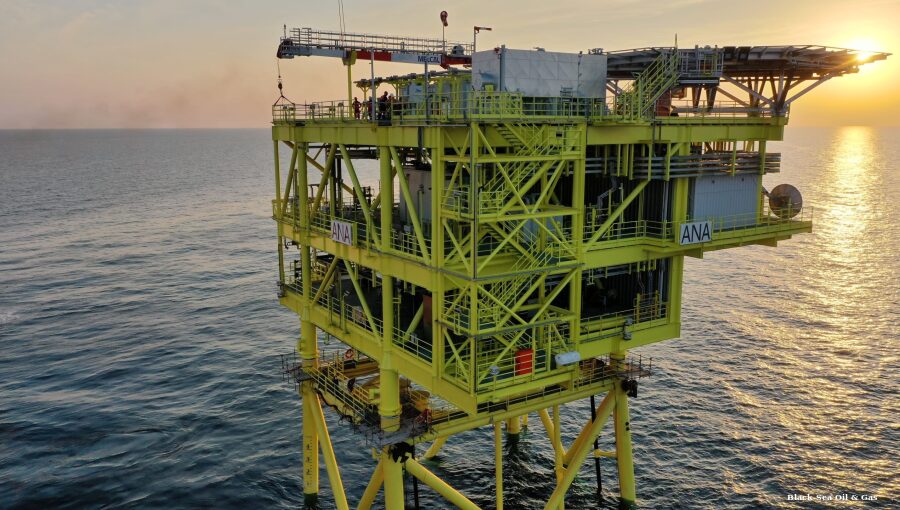
The Midia Gas Development project includes the Ana offshore platform, a 126-kilometre subsea pipeline and the Vadu onshore gas processing station. The operator remains BSOG, and the statement says production continues. This claim is plausible in the short term, because the infrastructure already exists and does not depend on the new owner to operate. The contribution figure varies between sources. The Carlyle and EBRD statement refers to approximately 12% of domestic gas needs, while Ziarul Financiar writes about 10% of gas production.
The difference may reflect different calculation bases: domestic needs, national production or extracted volume. Until the calculation basis is clarified, the figure should be read as a range, not a fixed value. The extraction figure has not been verified through a separate official document, so I treat it as information from the press.
2. Actors and their roles
Carlyle is the American fund that entered the shareholding in 2015, according to the company's statement, and that invested over 400 million dollars in the Midia project, according to Ziarul Financiar. Bob Maguire, co-head of Carlyle International Energy Partners, described the company's evolution from exploration to main production. His statement suggests the fund sees the transaction as an exit after the asset has matured, not as an abandonment. The EBRD is the international financial institution that has supported BSOG since 2017.
Victoria Zinchuk, the EBRD's regional director for Romania, Bulgaria and Greece, highlighted the project's contribution to diversifying supply. The EBRD's role is distinct from Carlyle's: the bank is not a buyer, but it is leaving a position it helped build. Mazarine Energy B.V. is the buying company. Edward van Kersbergen, described by the sources analysed as the owner of the company and its general manager, stated that Romania has been an essential component of his business since 2017.
Ziarul Financiar states that Mazarine is associated with Gazprom in gas production, and Economedia confirms that Mazarine has been active in Romania for over a decade. The claim about the link to Gazprom is not supported by a primary document in the available materials. The company register or an official Gazprom report should be consulted before the claim is treated as fact. Guido Funes Nova spoke about the remaining resources and the carbon capture and storage potential in the Midia block.
These statements represent the positions of the companies involved, not an independent assessment. Romanian authorities appear in the source only as the approving authority. In the materials analysed, there is no public position from the Government, the Ministry of Energy or the Competition Council on the transaction. The lack of a position signifies neither acceptance nor blocking.
3. The mechanism: from ownership to energy security
The causal chain proposed by the analysis is as follows. A change of shareholder alters the centre of strategic decision-making. The new centre may reorder investments, production priorities and contract models. If investments remain the same, production is maintained and the contribution to gas security does not change. If the new owner reduces investment or changes the destination of the gas, the effect on supply appears with a delay, as deposits deplete and new projects do not come into operation.
The first link is the best supported: operational continuity. The infrastructure exists, and the statements affirm that BSOG remains the operator. The second link is more fragile. Control over investment depends on shareholder agreements and the new owner's plans, which are not public. The third link, the connection with Gazprom, depends on an undocumented claim. If that connection exists and involves decision-making rights, the mechanism becomes political, not merely economic. The counter-hypothesis is that the transaction is an ordinary financial rotation.
An investment fund sells its matured asset to a buyer with capital capacity, and the change of owner affects neither production nor security. This interpretation is consistent with the companies' statements and with the fact that the infrastructure is already operational. The argument against it is informational asymmetry: the sources do not say how much control remains with Carlyle during the transition period or what conditions apply. A second counter-hypothesis concerns prices.
Ziarul Financiar notes that effects on consumer prices are limited under the price cap regime until 31 March 2027. If this limitation is accurate, the transaction does not immediately change bills, but rather medium-term security.
4. Scenarios and predictions
The dominant scenario is approval without additional conditions, with an estimated probability of between 40% and 50%. The main effect is continuity of production and a change of shareholding without visible effects in the first months. This scenario is consistent with the parties' statements and with the absence of any public blocking mechanism. The plausible scenario is postponement pending clarifications on control and association, with a probability of between 30% and 40%.
In this case, the authorities request information about the link with Gazprom and about the decision-making structure. The effect is delayed completion and uncertainty for investors. The tail scenario is conditional modification through security guarantees, with a probability of between 10% and 20%. Guarantees may include limits on the transfer of control or investment obligations. Blocking the transaction is unlikely, below 5%, but not impossible if new information emerges.
| Prediction | Horizon | Probability | How it is verified | Verification source |
|---|---|---|---|---|
| The transaction is approved without additional public conditions | 31.03.2027 | 40–50% | Approval statement or absence of a conditional statement | Competent regulatory authority, Monitorul Oficial |
| BSOG production remains above the 2025 level | 31.12.2027 | 60–70% | Production report or published extraction figure | ANRE or Black Sea Oil & Gas annual report |
| The transaction is completed by 30.06.2027 | 30.06.2027 | 55–65% | Official completion announcement | Carlyle or Mazarine statement |
5. Method, definitions and figures
Figures from statements and the press are cited as they appear. Percentages of contribution to national needs or production are not comparable with each other without the exact definition of the calculation basis. The 12% figure comes from the joint statement; the 10% figure comes from Ziarul Financiar and is not explained. The probabilities in the scenarios section are analytical estimates, not outputs of a calibrated model, and should be read as indicative ranges.
The shareholding entry dates (2015 for Carlyle, 2017 for the EBRD) come from statements and the press and have not been verified in the trade register. The claim about Gazprom is treated as unproven. The figures of 400 million dollars invested and 500 million dollars of net profit, cited by Ziarul Financiar, have not been confirmed by a financial report of the company.
Limits of the analysis
The analysis cannot establish the transaction price, because it has not been disclosed. It cannot confirm the link between Mazarine and Gazprom without a primary document. It cannot accurately estimate the effect on energy security without the new owner's investment plans. The most fragile assumption is that production remains stable after the change of ownership. Re-evaluation is necessary after the publication of the regulator's decision or of any document confirming the control structure.
Sources
- Global investment company Carlyle and EBRD have reached an agreement for the sale of Black Sea Oil & Gas, the largest offshore natural gas producer in Romania, to Mazarine Energy — G4Media
- Mazarine Energy takes over the company that exploits the gas from the Midia project. What the transaction means for Romania and energy security — Adevărul
- Mazarine Energy takes over BSOG Holding Activity, the largest offshore natural gas producer in Romania / Carlyle and EBRD have given their agreement for the sale — web:News.ro