ECONOMIE
The Sale of Black Sea Oil & Gas: What the State Stakes on Through the CEISD and Competition Council Approvals
Carlyle and the European Bank for Reconstruction and Development announced on Wednesday, 29 October 2026, an agreement for the sale of Black Sea Oil & Gas S.A. and BSOG Holding Activity S.A. to Mazarine Energy B.V., a transaction conditional on approvals from regulatory authorities.
The stakes for Romanian consumers are twofold: the company, according to the press release cited by Agerpres, has supplied approximately 12% of domestic natural gas demand since production began in June 2022, and the transaction must go through a state assessment in the middle of the heating season. The stakes are larger than a simple change of shareholders.
The thesis of this analysis is that the main risk is not the blocking of the transaction but its delay during the period when the gas market is most sensitive. The dominant scenario, which we regard as an editorial judgment and not a calibrated estimate, is one of approval postponed with additional requirements. #### 1. What happened and what the company announced
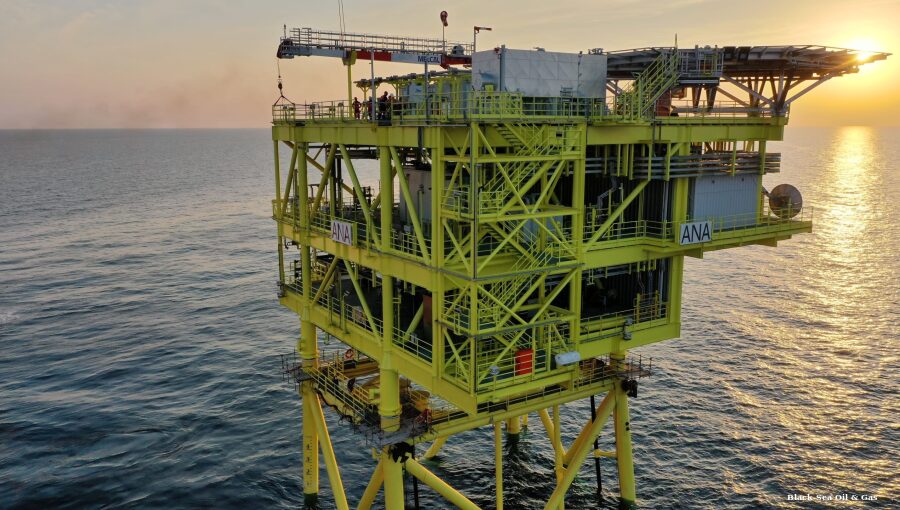
The announcement comes from a joint press release by the investors and the operator, carried by Agerpres, Antena 3 and Mediafax. According to it, Black Sea Oil & Gas, acting as operator and on behalf of its concession partners, coordinated investments of over 400 million dollars in the Midia Gas Development Project, described as the first offshore hydrocarbon production project developed in the Romanian Black Sea sector in more than 30 years.
The project included the Ana offshore production platform, a 126 km subsea pipeline and the new gas processing station at Vadu. The figure of over 400 million dollars is a claim of the company's press release and has not been independently confirmed; until it is verified against the company's registers or annual reports, it should be read as the company's own statement. The press release states that the transaction is subject to obtaining the necessary approvals from regulatory authorities.
The transaction value has not been made public, according to Biziday.ro. This means the financial perimeter of the sale cannot be assessed from public sources as of the date of this analysis. The three main sources confirm the same framework: seller Carlyle and the EBRD, buyer Mazarine Energy B.V., object Black Sea Oil & Gas S.A. and BSOG Holding Activity S.A. They do not, however, confirm timelines, contractual conditions or other commitments by the buyer.
The 12% figure is what gives the announcement its economic weight, but it is also the most fragile from the standpoint of verification. The press release attributes it to the company and to the period since production began, and Antena 3 repeats it as "almost 12% of Romania's natural gas demand." Until such confirmation, the figure remains a claim by the operator and not an independently verified fact. #### 2. The mechanism: from commercial agreement to state approval
The causal chain has three links. The first is legal: the transaction triggers foreign direct investment screening. According to the Mediafax text, the approval is required from the Commission for the Examination of Direct Investments (CEISD) and from the Competition Council, because the buyer already has operations in Romania. Mediafax mentions a value threshold of 5 million euros, raised from 2 million euros in March.
This figure has not been confirmed from the text of the normative act published in the Official Gazette, and until it is verified we do not use it as an established fact. The general logic of the mechanism nonetheless remains clear: a foreign buyer of a strategic energy asset goes through a state examination, and the pace of that examination depends on the file and on the administration reviewing it. The second link is operational.
A postponed approval does not by itself change production, but it can change investment decisions and short-term contracts. The press release states that the operator ensured supply during a critical period for the market. If the transaction is prolonged, uncertainty about investment plans and contract continuity becomes an administrative problem, not a production one. The effect on gas for household consumers depends on the fact that the price-cap regime, according to the regulatory calendar, runs until 31 March 2027, meaning exactly beyond the heating season.
The third link is political. The approval does not arise in a vacuum: it enters a government agenda in which other files compete for attention. In the programme calendar, the budget rectification is cited by Euronews with ministry requests of nearly 60 billion lei, a priority that may absorb decision-makers' time. There is, however, no documented link between the two files; they are simply simultaneous in the same period and do not permit the conclusion that one is being delayed for the other.
The main counter-hypothesis is that the approval passes relatively quickly, without conditions. Its argument is that the CEISD mechanism is a procedural filter and that the buyer already has a presence in the country, which reduces unknowns. A second counter-hypothesis is more severe: that the state imposes conditions on supply or on transparency of shareholding. Both are plausible. The fragility of the analysis lies in the fact that we do not yet have the text of the approval, its conditions or its procedural deadlines. #### 3. The actors and what the sources say about their roles
Black Sea Oil & Gas is the central entity of the transaction and the subject of the press release. According to the sources, the company coordinated the investments at Midia and is the one moving into the new structure. Its operational role is not contested in any source, but we do not know from the available texts whether, and what, commitments it has toward the Romanian state after the change of control. Mazarine Energy B.V. is the buyer.
Biziday.ro and Forbes Romania describe it as controlled by Dutch entrepreneur Edward van Kersbergen, a claim repeated by some other sources. We have not confirmed this structure from the Dutch commercial register or from the company's documents, so the claim about its control should be treated as press information until verified.
The same lack of verification applies to the claim, present in one source, about the number of deposits the buyer would operate in Romania; we do not reproduce it in the analysis until primary confirmation. Carlyle is the American investor that held the stake and, according to the press release, supported the company as a shareholder for over a decade. The EBRD has provided support since 2017, according to the same release.
These two entities are the sellers and therefore have an interest in the approval coming as quickly as possible, but they have no decision-making role in the state procedure. The authorities that decide are the Commission for the Examination of Direct Investments and the Competition Council, cited by Mediafax. We have no information about their position on this file. Public sources cited by Mediafax and Euronews link the discussion to the government's budget priorities, but they do not convey an official position on the transaction.
Antena 3 and Agerpres attribute the announcement to the companies' press release, and Iuliu Vlădescu appears as the author of one of the articles. His role is limited to writing the news item; no statement by him on the substance of the transaction appears. #### 4. What the figures show and what they do not
The available figures are few and come largely from the company's press release. The investment of over 400 million dollars, production since June 2022, the 126 km pipeline and the 12% share are all information from the operator. The 5 million euro threshold, presented as recently raised from 2 million euros, comes from a press source and not from the normative act.
Comparative data are missing: we do not have a production series for Midia, we do not have Romania's total gas consumption over the same period, and we do not have the distribution across customers. Without these baselines, conclusions about the share and the strategic importance of the company remain partial. What we can say is that the transaction is of significant size for the Romanian offshore sector, since the press release describes the company as the country's largest offshore gas producer.
This claim, however, belongs to the same source and has not been compared with other market data. Without a public value for the transaction, we cannot say whether the price reflects production potential or a reassessment of risk. Nor can we say whether the sale represents a partial or full exit by the investors, since the press release does not detail the structure of the transaction. #### 5. Scenarios and predictions
The scenarios below are subjective editorial judgments, built on the mechanism described, and not calibrated estimates; they are not based on a quantitative model and should not be read as probabilities. The first scenario is approval granted without conditions. It would be plausible if the CEISD procedure is purely formal and if the buyer already has a solid relationship with the authorities. The constraint is the absence of any public signal about timelines. The consequence would be a transaction closed before the heating season.
The second scenario is approval postponed with additional requirements. The driver is the need to verify the transparency of the buyer's shareholding, and the constraint is that approvals for strategic gas assets may require inter-institutional consultation, which adds time. The consequence would be prolonged uncertainty for employees, contractors and partners. This is the scenario we consider most plausible, but the judgment remains subjective. The third scenario is approval with supply conditions.
It would arise if the authorities demand delivery guarantees on the domestic market for the 2026-2027 season. The indicator to watch would be any public reference to delivery commitments. The fourth scenario, blocking of the transaction, is the least plausible as an editorial judgment. It would imply a negative decision and a withdrawal by the parties, and we have no public sign of this. The verifiable predictions are as follows.
The table below contains no numerical probabilities, because we do not have databases that would support them; instead, it contains observation criteria.
| Prediction | Horizon | Probability | How it is verified | Verification source |
|---|---|---|---|---|
| The CEISD or Competition Council approval is published | by the start of the heating season, 31 March 2027 | editorial judgment: the dominant scenario is postponement | official communication on the decision | CEISD and Competition Council websites |
| The transaction is announced as completed | by 31 March 2027 | editorial judgment: plausible if approval is granted without conditions | closing announcement by the parties | press releases of Carlyle, EBRD and Mazarine Energy |
| The transaction value is made public | by completion | editorial judgment: uncertain | statement or report by the parties | company reports and public registers |
| The 12% share of domestic demand is confirmed or corrected | by 31 December 2026 | editorial judgment: unknown | publication of production and consumption data for the period | ANRE, Transgaz and INS |
#### 6. What comes next and which signals are worth watching
The most useful signals are procedural. The first is the publication of the CEISD or Competition Council decision, which would clarify whether the approval is unconditional. The second is any reference by the authorities to delivery commitments, which would indicate a supply requirement. The third is the publication of the transaction value, which would allow the price to be assessed against the declared investments.
For consumers, the immediate stake is not the sale price but the continuity of gas during the heating season. If the transaction is not resolved before the season, the operator keeps its obligations, but uncertainty about investments and contracts may persist.
#### Method, definitions and figures
The sources used are the companies' press release, as carried by Agerpres, Antena 3, Mediafax, Stirile ProTV, Biziday.ro, Bursa.ro, Economica.net and Forbes Romania, plus the scheduled calendar from the olivLaw register.
The figures are defined as follows: the investment of over 400 million dollars is the figure declared by the operator's press release for the Midia Project; the 12% share is defined in the release as a share of Romania's domestic natural gas demand since production began in June 2022, but the exact perimeter (production, consumption or another base) has not been verified. The 5 million euro CEISD threshold comes from the Mediafax source and not from the normative act.
Probabilities and scenarios are not calibrated; they are subjective editorial judgments. The phrase "below 25%" and any numerical prediction without baseline data have been removed.
#### Limits of the analysis
The analysis cannot establish the value of the transaction, the conditions of the approval or the position of the authorities, as these are not public in the available sources. The 12% figure and the investment of over 400 million dollars remain the operator's claims until verified from independent sources. The claim about the control structure of Mazarine Energy is not confirmed from the Dutch register. The most fragile premise is that the decision will be taken within the horizon of the heating season; if the authorities already have an internal timetable, the dominant scenario changes. The analysis will be re-evaluated upon publication of any CEISD or Competition Council decision.
Sources
- Carlyle și BERD au ajuns la un acord pentru vânzarea Black Sea Oil & Gas către Mazarine Energy - Agerpres
- Black Sea Oil&Gas, firma care asigură aproape 12% din necesarul de gaze naturale al României - Antena 3
- Carlyle și BERD au ajuns la un acord pentru vânzarea operatorului proiectului offshore - Mediafax