GEOPOLITICA
Zelensky between Washington and Brussels: who pays if American support is withdrawn?
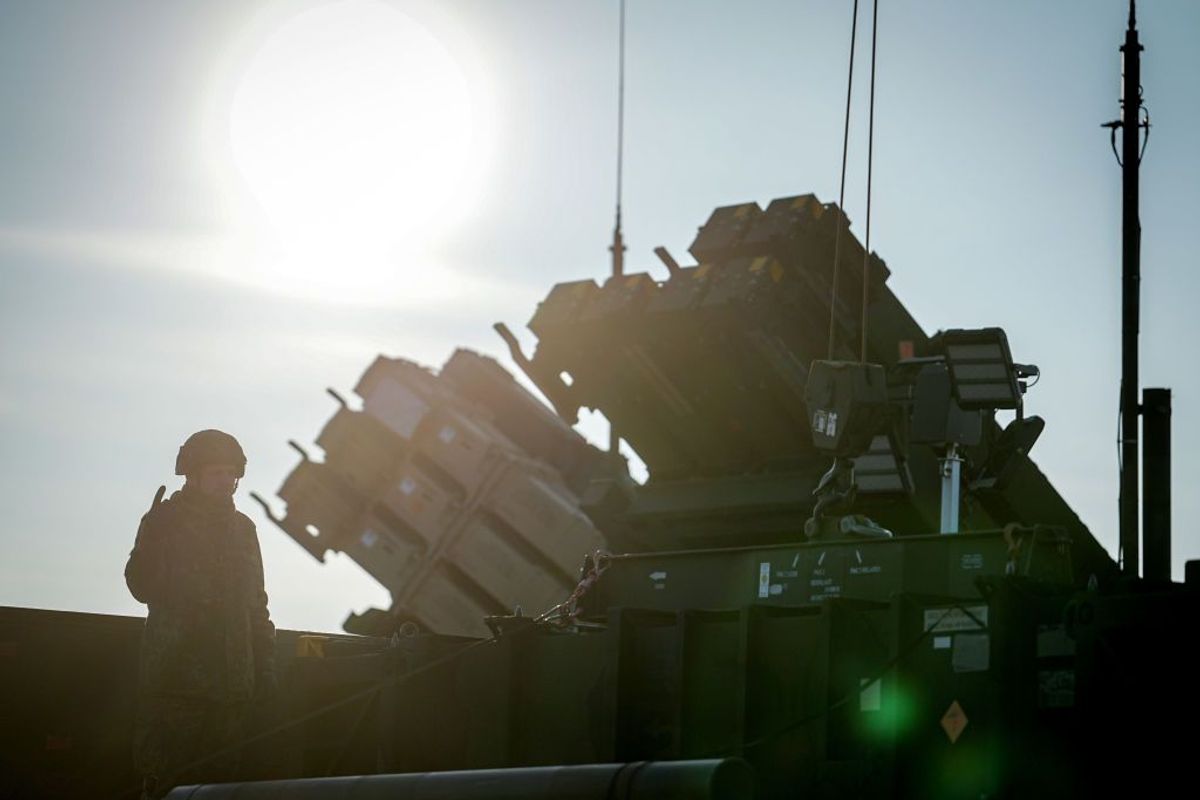
The President of Ukraine asked the European Union for 300 Patriot missiles and an additional 70 billion euros for 2027, while relations with Washington have deteriorated.
Available data show that Zelensky requested direct European support, not through an American mechanism, and this changes the way Kyiv negotiates its security. Verification of the figures from Kyiv Post, particularly the number of missiles and the sum, remains necessary before any numerical conclusion is published. ### The Stakes
If American support slows, Ukraine increasingly depends on European states for air defense and for budget financing. For Romania, this means additional costs in the defense budget and pressure on European funds. The thesis of this article is that the shift in weight between Washington and Brussels is less a rupture than a redistribution of the burden, and the dominant scenario, with an estimated probability of between 40 and 50%, is one in which Europe covers a larger share of the effort, with the caveat that the initial figures have not yet been independently verified. #### 1. What Happened and the Decision Behind It
The most important sources in the cluster describe the same development: an appeal by Kyiv to the European Union for the delivery of 300 Patriot missiles, against the backdrop of reported depletion of Ukrainian stocks. Kyiv Post attributes this request to President Zelensky and links it to the need for 70 billion euros for 2027.
France24 describes the same move as a turn toward Europe amid the deterioration of relations with Trump, which suggests that the decision to seek European support was formulated as an alternative, not as a complement. The decisions behind it are not fully public. What can be said with confidence is that Kyiv is diversifying its sources of financing and air defense.
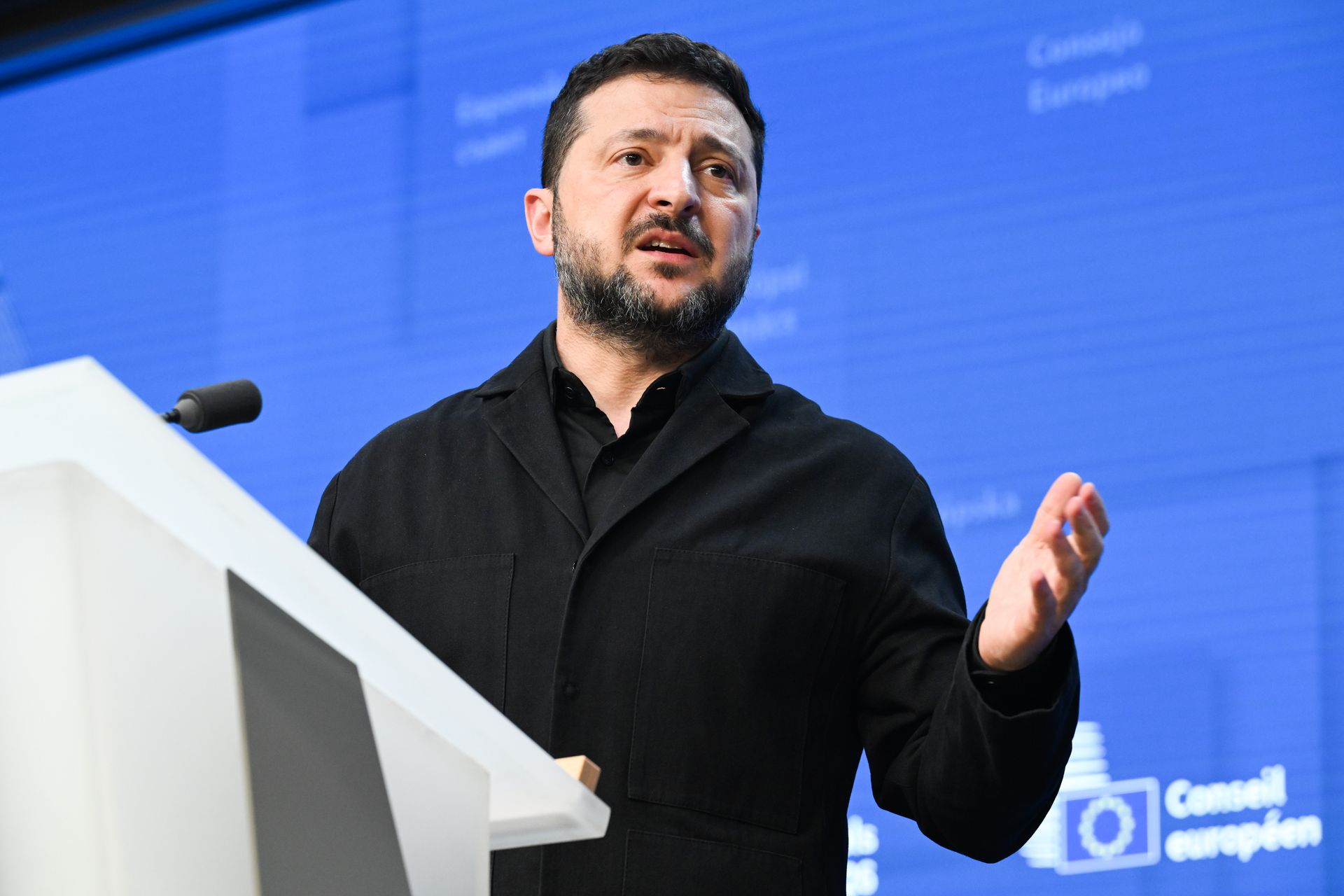
What remains unclear is whether Washington has effectively reduced deliveries or whether this was an administrative delay, since the sources contain no official confirmation of either. At the European Union summit in Brussels, Zelensky argued that an agreement between the United States and Russia for the purchase of diesel would bring additional revenue to Moscow, a statement cited by Mediafax after Reuters.
The President of Ukraine thus attacked not only Russia but also the logic of a bilateral understanding which, in Kyiv's view, reduces its room for negotiation. #### 2. Actors and Their Declared and Undeclared Motives
Donald Trump is the central actor in this tension. The sources indicate that he has publicly stated he is not a great admirer of Zelensky, and TASS, citing the New York Times, describes a relationship close to breaking point. Trump also announced that Russia and Ukraine had agreed not to attack each other's energy infrastructure, a statement that, according to Mediafax's account, took Zelensky by surprise. The declared motives relate to cost reduction and a transactional approach; undeclared motives cannot be established from the sources.
Volodymyr Zelensky is acting to maintain European support and to avoid a US-Russian understanding made over Kyiv's head. His immediate interest is financing and defense stocks. What cannot be established is whether the appeal to Europe is a long-term plan or a reaction to momentary pressure. The White House appears in the sources as an actor that asked SpaceX to restore the Starshield service for Ukraine, according to Channel NewsAsia's report. Its exact role in decisions on access to infrastructure, however, remains unclear.
Elon Musk is mentioned in reports on the interruption of Starlink in Ukraine, and Trump has claimed that neither he nor Musk caused it. The sources do not establish a chain of command between Musk and the White House; there is no evidence that Musk's actions reflect a government decision. On the European side, the European Union and the European Commission are the actors that must respond to the financing request.
The reports show a summit divided over how costs should be shared, but do not provide a complete picture of the positions of member states. ##### Domestic Constraints
In the United States, the November 2026 congressional elections create a context in which external support becomes an electoral issue. The calendar shows elections scheduled for 3 November 2026, two weeks after the date of the article. For Zelensky, the constraint is budgetary and military: without missiles and without financing, air defense cannot be sustained. #### 3. The Mechanism: Cause, Effect and Counter-Hypothesis
The causal chain described by the sources has three links. The first is the deterioration of relations between Washington and Kyiv, documented by the NYT through TASS's account and by France24. The second is Ukraine's appeal to Europe, which appears as a reaction to the first link. The third, the probable effect, is the redistribution of costs: European states take on a larger share of financing and defense stocks.
Each link has support in the available sources, but the connection between them is inferred, not demonstrated. The counter-hypothesis is that the tension is superficial and that military cooperation will continue through technical channels, regardless of leaders' rhetoric. This hypothesis is plausible, since American and Ukrainian military institutions have old and stable ties. If true, the request to Europe would be a diversification, not a change of direction. The available data do not allow it to be rejected.
A second counter-hypothesis is that Russia perceives the Western divergence and is waiting for better terms. The statements attributed to Zelensky, according to which Russia is not interested in negotiations in any format, suggest that Moscow has not yet changed its position. Therefore, the Western divergence has, for now, no visible effect on the negotiations. #### 4. Scenarios and What They Mean for Romania
The dominant scenario, with an estimated probability of between 40 and 50%, is one in which Europe covers a larger share of the costs of the war while the United States reduces its direct involvement. A second, plausible scenario, with a probability of between 25 and 35%, is that American pressure forces Kyiv into concessions. A tail scenario, with a probability below 25%, is that the tension is contained and the status quo persists.
For Romania, the first scenario means additional pressure on the defense budget, with effects on spending for the security of the eastern flank. A second scenario would reduce the immediate military risk for Kyiv, but would create a political crisis on the Union's border. Indicators to watch are Patriot missile deliveries, the decision of the European Council on the 70 billion euros, and the meeting between Kyiv and Washington announced for the coming days. #### 5. What Comes Next: Verifiable Predictions
The table below lists predictions that can be checked against public sources. The probabilities are ranges, not exact values, and remain uncalibrated.
| Prediction | Horizon | Probability | How to verify | Verification source |
|---|---|---|---|---|
| The European Union approves an additional support package for Ukraine | 31.12.2026 | 40–50% | Decision of the European Council | European Commission |
| Confirmed deliveries of Patriot missiles to Ukraine from European sources | 31.01.2027 | 35–45% | Official delivery announcements | Defense ministries of the supplying states |
| Official Kyiv–Washington meeting on military support | 30.11.2026 | 50–60% | Official communiqué from the White House or the State Department | White House |
#### 6. Method, Definitions and Figures
The figures in the article come from the sources listed in the cluster: Kyiv Post (300 Patriot missiles and 70 billion euros), TASS citing the NYT (description of the relationship), France24 (the turn toward Europe), Mediafax citing Reuters (Zelensky's statement on diesel) and Channel NewsAsia (Starshield). No figure has been independently verified against official transcripts.
The probabilities are internal, uncalibrated estimates, expressed as ranges. The data do not allow a quantification of the budgetary effect on Romania, so the impact on the defense budget remains qualitative.
The TASS source is a channel of the Russian state and was used only to describe the NYT's report, not for independent facts. Telegram posts from pro-Russian OSINT channels are cited only as a signal of position, not as evidence.
#### Limits of the Analysis
The analysis cannot establish Trump's undeclared motives or whether a formal decision to reduce American support exists. The figures of 300 missiles and 70 billion euros must be checked directly against Kyiv Post before publication, and the quotes attributed to Zelensky and Trump must be compared with official transcripts. If a Kyiv–Washington meeting or an official European package appears before 31 December 2026, the conclusions regarding the dominant scenario must be re-evaluated.