GEOPOLITICA
A possible ceasefire between Russia and Ukraine — why a nearly frozen front does not yet bring peace and what comes next to summer 2027

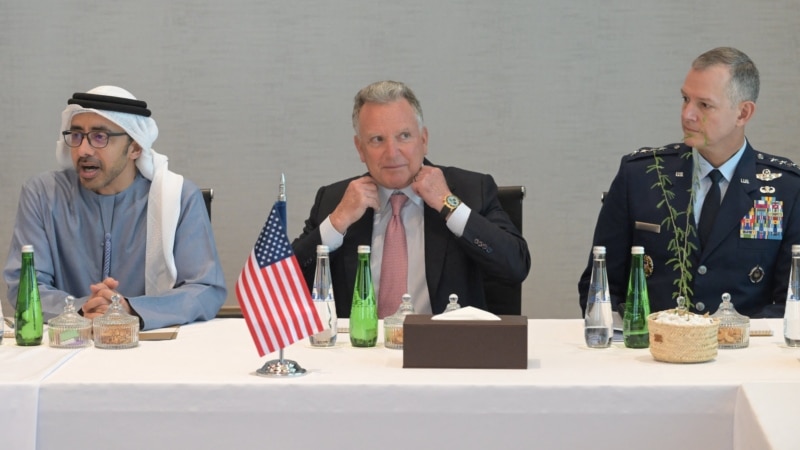
From Abu Dhabi to Moscow and back, the diplomacy to stop the war in Ukraine has had its busiest week this year. The question is a single one: are we close to a ceasefire?
The analysis answers in four steps. What happened at the negotiating table and on the front. What the four short truces of 2026 showed. Which of the competing hypotheses best explains the deadlock. And which scenarios follow to 30 June 2027, with probabilities that will be checked in public.
The testable thesis: the nearly frozen front does not, for now, produce the pressure that leads to a general ceasefire, because Moscow still sees itself as winning, while American pressure falls mostly on Kyiv. The most likely outcome of the coming months is a partial truce, not peace.
Where the talks stand
The year began with hopes. In January and February, the United States brought the Russian and Ukrainian delegations together in Abu Dhabi. The only concrete result was an exchange of 314 prisoners, 157 on each side. Russia then demanded that the Ukrainian army withdraw from the part of Donbas it still holds, and Kyiv refused.
Then the talks stopped because the Trump administration focused on its war with Iran. They resumed only in the autumn. In the same week the Kremlin announced the new round, Washington had eased some sanctions and agreed to buy 300,000 tonnes of Russian diesel, while Ukraine was still waiting for the air defence interceptors it had been promised.
The third trilateral round, on 10 and 11 November, brought no ceasefire. Both sides struck each other on the very night of the talks, and neither made tangible concessions. The talks covered a limited truce, for energy infrastructure and Black Sea shipping. Russian Foreign Minister Sergei Lavrov again rejected an immediate ceasefire, accusing Europe of wanting to buy time for the Ukrainian army.
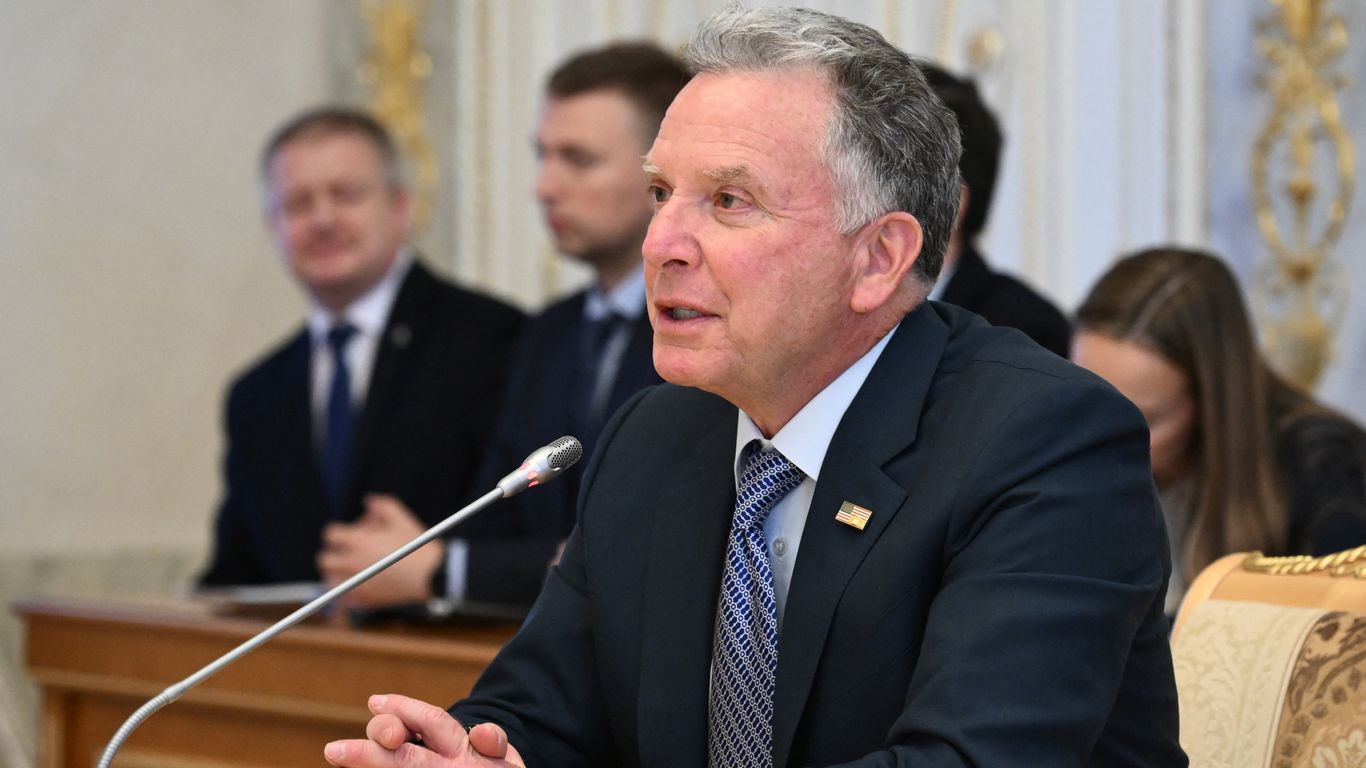
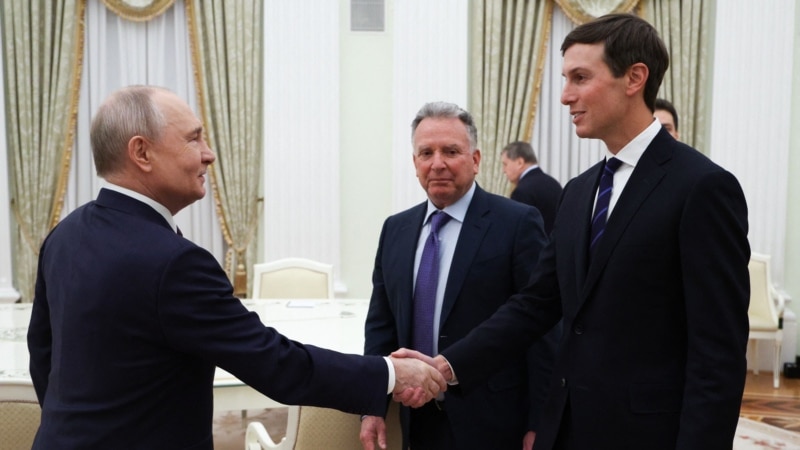
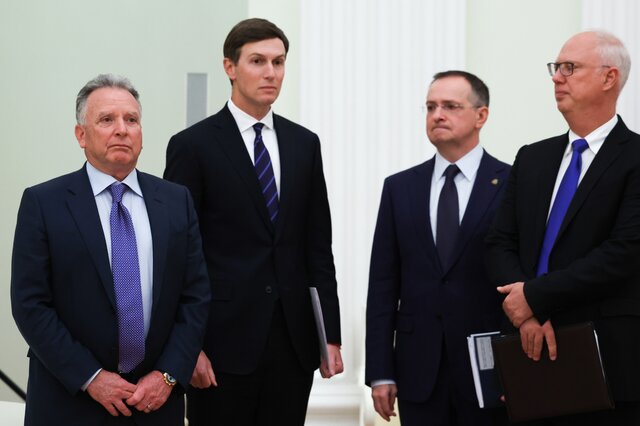
On 12 November, US envoys Steve Witkoff and Jared Kushner were received by Putin in Moscow. They asked for the Kremlin's consent to Europeans joining the talks. Putin repeated his opposition to any foreign troops in Ukraine, which he called "a continuation of war". Kushner said after the meeting that both sides had accepted a European presence, and Witkoff that a new meeting had been set.
Four days later, the accounts no longer matched. Kushner wrote on Monday, 16 November, that there is progress, but that "a final agreement will require difficult decisions". Putin's adviser, Yuri Ushakov, said the same day that Russia had not yet agreed to Europeans taking part in the next round. The date of that round has not been announced.
Four short truces, no peace
2026 has already seen four attempts to stop the fighting, at least partly. The table compares them, because they show what kind of ceasefire is possible and what kind is not.
| The truce | Who announced it | Duration | What happened |
|---|---|---|---|
| Orthodox Easter, 11–13 April | Proposed by Zelensky, period set by Putin | 32 hours | Ukraine reported 469 violations, mostly by drones; fighting resumed at once |
| Victory Day, 9–11 May | Announced by Trump, with a prisoner exchange | Three days | Mutual accusations of violations, no extension |
| The "energy ceasefire", 11 October | Announced by Trump, without the parties' confirmation | Undefined | Zelensky accused Russia of striking power plants the next day |
| Oleshky, Kherson region, ended on 2 November | Brokered by Melania Trump, according to the White House | Six days | Evacuations and aid; Kyiv accuses Russia of reinforcing its positions |
The table's lesson is simple. The Easter truce was limited to 32 hours and violated hundreds of times, according to Kyiv. The "energy ceasefire" was announced by the US president before the parties confirmed they had accepted it, and Zelensky learned of it from the press. What worked, for as long as it worked, were the small, humanitarian and local arrangements with an immediate benefit for both sides: the prisoner exchanges and the evacuation of Oleshky. A truce imposed from outside, without the shooters' own interest in it, did not last even two days.
The paradox of the frozen front
The classic theory of negotiation, set out by William Zartman, holds that a conflict becomes "ripe" for peace when both sides reach a stalemate that hurts and no longer see a way to win. On the map, the stalemate exists. According to ISW, Russia gained a net 117.38 km² between January and October 2026, against 5,304 km² in 2025. In October, ISW even estimated a negative balance for Russia, after Ukrainian counter-offensives in the Dnipropetrovsk region and north of Lyman.
And the cost exists, on both sides. Ukraine's General Staff reports 54,400 Russian soldiers killed or seriously wounded in October, the highest monthly figure since the invasion, a number nobody can verify independently. Russia's oil and gas revenues fell by 17% in the first nine months, even though oil prices were high. The Bank of Russia kept its key rate at 14% on 23 October, because price pressure remains high. Ukraine, for its part, is entering its fifth winter of war with its power grid hit almost daily.
Why, then, is the conflict not "ripe"? Because ripeness is about perception, not the map. Putin said in October that Russia had captured about 6,500 km² and 310 settlements since the start of the year, a figure no independent mapping confirms. In Abu Dhabi, according to Zelensky, the Russian negotiators claimed that Moscow already controls half of the Donbas still held by Kyiv, and the Ukrainian side answered with footage from the front. A leader who believes he will take the rest of Donbas within months has no reason to freeze the line now.
The second piece of the paradox is American pressure, which falls asymmetrically. In October, Washington threatened to suspend intelligence sharing and European purchases of US weapons for Ukraine if Kyiv kept striking Russian refineries, and the delivery of Patriot interceptors was delayed. The administration denies any pause in intelligence sharing. On the Russian side, the pressure eased: lighter sanctions and a diesel contract. When the mediator presses the side asking for a ceasefire and lightens the cost for the side refusing it, the ceasefire moves further away.
What is documented in the chain: the movement of the front (ISW), the economic costs (the Bank of Russia, Russian fiscal data), the US pressure on Kyiv and the easing of sanctions (CNN, the Washington Post, Al Jazeera), and the opposite order of demands (statements by Lavrov and Zelensky). The Russian human cost is one side's figure. The link "the Kremlin believes time is on its side" is our conclusion, drawn from Putin's public statements and from what the Russian negotiators claimed, not direct information. The last link is the condition we propose for breaking the chain.
What each side wants
| Issue | Russia | Ukraine | United States |
|---|---|---|---|
| Order of steps | First the full agreement, then the guns fall silent | First the ceasefire, then territory | Partial truces as an intermediate step |
| Territory | Ukraine's withdrawal from all of Donbas and recognition of the annexations | No withdrawal; territory is discussed only between leaders | Trump: Ukraine might accept "a little bit different shape" |
| Security guarantees | No foreign troops; a new security architecture for Europe | Strong guarantees and funding for the army for ten years | A new framework including Ukraine, Russia and Europe |
| Europe at the table | Not yet officially accepted | Demanded | Wanted, according to Kushner and Rubio |
Two things follow from the table. First: on the order of steps, the positions are opposite, not merely distant. Second: Russia has widened the agenda. A source in the Russian delegation said in Abu Dhabi that ending the war is only one item on Moscow's agenda, and the presence of Deputy Foreign Minister Sergei Ryabkov, previously involved in the demands for NATO to pull back from eastern Europe, shows what the "new architecture" means. The wider the agenda, the more a general ceasefire becomes a bargaining chip for other concessions.
What the evidence explains: analysis of competing hypotheses
We used the analysis of competing hypotheses (ACH), from intelligence practice: we keep the hypothesis contradicted by the least evidence, not the one with the most arguments in its favour. Four hypotheses describe what will happen by mid-2027.
| Evidence | H1. The war goes on, with one-off truces | H2. General ceasefire on the current line, without a deal | H3. Full peace agreement | H4. Talks break down and the war escalates |
|---|---|---|---|---|
| The front barely moves any more | neutral | supports | supports | contradicts |
| Lavrov again rejects an immediate ceasefire | supports | contradicts | contradicts | neutral |
| Russia demands all of Donbas and refuses foreign troops | supports | contradicts | contradicts | neutral |
| Exchange of over 1,000 prisoners on each side, agreed | supports | supports | neutral | contradicts |
| Washington presses Kyiv and eases sanctions | supports | neutral | neutral | contradicts |
| The 2026 truces did not last beyond a few days | supports | contradicts | contradicts | neutral |
| The US announces a new round and European participation | neutral | supports | supports | contradicts |
H1 has no evidence against it. H2 is contradicted by three pieces of evidence, H3 also by three, and H4 by four. The ACH conclusion: most likely, the war goes on, with one-off truces and prisoner exchanges. H2 remains the most serious alternative, because the frozen front and the new round with the Europeans support it. It would become dominant if Moscow dropped, in practice, the "agreement first" condition.
There is a historical precedent for H2: Korea. The negotiations for the Korean armistice began in July 1951, on a front that was already nearly frozen, and ended only in July 1953. The armistice stopped the fighting without a peace treaty, which has not been signed to this day. The lesson for Ukraine is twofold: a frozen line can hold for decades without peace, but the road to it can take years, not months, even after the front stops.
The scenarios to 30 June 2027
The scenarios below describe the same variable, at the same date: what kind of ceasefire is in force on 30 June 2027. They cover every possible situation, and the probabilities add up to 100%.
| Scenario | What it means | Probability |
|---|---|---|
| S1. War without a truce | Fighting continues, with no truce, not even a partial one, accepted by both governments and in force | 45%, even chance |
| S2. Only a partial truce | A truce on energy, the Black Sea or air strikes, accepted by both governments, while ground fighting continues | 30%, unlikely |
| S3. General ceasefire, no deal | The guns fall silent along the whole front line, but there is no signed peace agreement | 18%, very unlikely |
| S4. Signed peace agreement | A framework agreement signed by both governments, with the ceasefire in force | 7%, highly unlikely |
Why these figures. S1 and S2 add up to three quarters of the probability because ACH favours them and because no truce in 2026 lasted beyond a week. S2 gets 30% because a truce on energy and the Black Sea is exactly what is being discussed now, and both sides have a direct interest in it: Russia protects its refineries, Ukraine its power grid. S3 and S4 add up to a quarter, not less, because the front really is frozen, Washington wants a result, and a change of calculation in Moscow can come quickly. Korea shows, however, that moving from S1 to S3 can take years.
What it means for Romania
For Romania, the most important truce is not the general one, but the one on the Black Sea. In October, the war came closer than ever to Romanian waters. On 15 October, the tanker Wine Trader burned near Sulina. On 17 October, Romanian F-16s shot down two Russian Geran drones near Sulina. On 23 October, the ship Khoryv was sunk by a drone off Constanța, and a Ukrainian sailor died. President Nicușor Dan blamed Russia, and the North Atlantic Council met on 20 October at Romania's request.
A Black Sea truce would most quickly reduce the risk for the Danube ports, the Sulina canal and Constanța, through which Ukraine's grain exports pass. A general ceasefire on the current line would have a more ambiguous effect. It would stop the strikes, but it would give Russia time to rebuild its army, so the eastern flank, Romania included, would have to keep defence spending high for years. Peace would not, therefore, mean a smaller defence budget.
The third channel is the price of fuel. Brent crude closed at 95.84 dollars a barrel on 13 November, after a second consecutive weekly fall, on signs of a supply surplus. The price rose from 60.75 dollars at the start of the year to a peak of 118.35 dollars on 31 March, during the war with Iran. The Persian Gulf, not Ukraine, moved oil in 2026. A ceasefire would add only downward pressure, especially if it brought an easing of sanctions on Russian oil.
The grey fan is not a forecast but the market's memory: it shows how much Brent has historically moved over the same length of time. The median for 31 March 2027 is 97.6 dollars, the 50% range runs from 86.5 to 110.7 dollars, and the 90% range from 62.2 to 139.3 dollars. Historically, the price would have ended below 80 dollars in 15% of cases, between 80 and 95 in 29%, between 95 and 110 in 30% and above 110 in 26%.
Our scenarios lean slightly lower than history: A, below 80 dollars, 20%, unlikely; B, between 80 and 95, 35%, less likely than not; C, between 95 and 110, 30%, unlikely; D, 110 dollars or more, 15%, very unlikely. The reasons are the supply surplus signalled by the market and the fact that the ceasefire scenarios, although unlikely, would push the price only lower. The upper tail remains because of Iran and the threats to Gulf shipping, not Ukraine.
What we are watching: the signs that would shift the scenarios
Four signs would shift probability towards S2 or S3. The first is the date and format of the next round: if the Europeans actually sit at the table with Russia, Moscow implicitly accepts the discussion of guarantees. The second is the text of a truce on energy and the Black Sea, signed by both governments, not merely announced by Washington. The third is the completion of the exchange of over 1,000 prisoners on each side, which would show that humanitarian arrangements can be made at scale. The fourth is the Kremlin's language: if Peskov or Lavrov no longer reject a "short truce", the "agreement first" condition has softened.
Three signs would shift probability towards S1 or towards escalation: a Russian winter offensive that breaks the line at Kostiantynivka, new massive strikes on Ukraine's power grid before the next round, and a new hold-up of US interceptor deliveries. A Trump–Putin–Xi summit, discussed by the Kremlin, could shift probability either way, depending on whether Ukraine is at the table.
Testable predictions
The predictions below are recorded and will be checked in public when they fall due. F1–F4 are the ceasefire scenarios, F5–F8 the oil scenarios; each group adds up to 100%. Compared with our August forecast, which gave 15% to a general ceasefire by the end of the year, we cut the probability to 7%: six weeks remain, and Russia has again rejected an immediate ceasefire.
| Code | The claim | Due | Probability |
|---|---|---|---|
| F1 | Scenario S1: no truce, not even a partial one, is in force | 30.06.2027 | 45%, even chance |
| F2 | Scenario S2: only a partial truce is in force | 30.06.2027 | 30%, unlikely |
| F3 | Scenario S3: general ceasefire, without a signed peace agreement | 30.06.2027 | 18%, very unlikely |
| F4 | Scenario S4: signed peace agreement, with the ceasefire in force | 30.06.2027 | 7%, highly unlikely |
| F5 | Brent closes below 80 dollars a barrel | 31.03.2027 | 20%, unlikely |
| F6 | Brent closes between 80 and 95 dollars | 31.03.2027 | 35%, less likely than not |
| F7 | Brent closes between 95 and 110 dollars | 31.03.2027 | 30%, unlikely |
| F8 | Brent closes at 110 dollars or more | 31.03.2027 | 15%, very unlikely |
| F9 | Russia and Ukraine announce a general ceasefire | 31.12.2026 | 7%, highly unlikely |
| F10 | Both governments publicly accept a truce on energy or the Black Sea | 31.03.2027 | 40%, less likely than not |
| F11 | The exchange of at least 1,000 prisoners on each side is completed | 31.01.2027 | 70%, likely |
| F12 | Representatives of European governments negotiate at the same table as the Russian delegation | 31.03.2027 | 35%, less likely than not |
| F13 | Putin and Zelensky meet face to face | 30.06.2027 | 8%, highly unlikely |
| F14 | Another merchant ship is hit by a drone in Romania's territorial sea or exclusive economic zone | 31.03.2027 | 55%, more likely than not |
How these predictions could be wrong. The first failure mode: we underestimate how fast the Kremlin's calculation can change, for instance after a budget crisis or after a wider understanding with Washington, in which case S3 would have been too low. The second: we overestimate the partial truce, because the October "energy ceasefire" shows that such a deal can be announced without being respected, and F10 requires public acceptance by both governments. The third, for oil: Iran dominates the price, and an escalation in the Gulf would make D the main scenario, regardless of Ukraine.
The conclusion stays the one from the start. A ceasefire in Ukraine is not impossible, and the nearly frozen front makes it more plausible than a year ago. But until Moscow concludes that time is no longer on its side, what can be achieved are partial halts to the fighting and prisoner exchanges. For Romania, these are no small thing, if they include the Black Sea.