GEOPOLITICA
Patriot for Ukraine: a €2.1 billion contract that does not deliver quickly
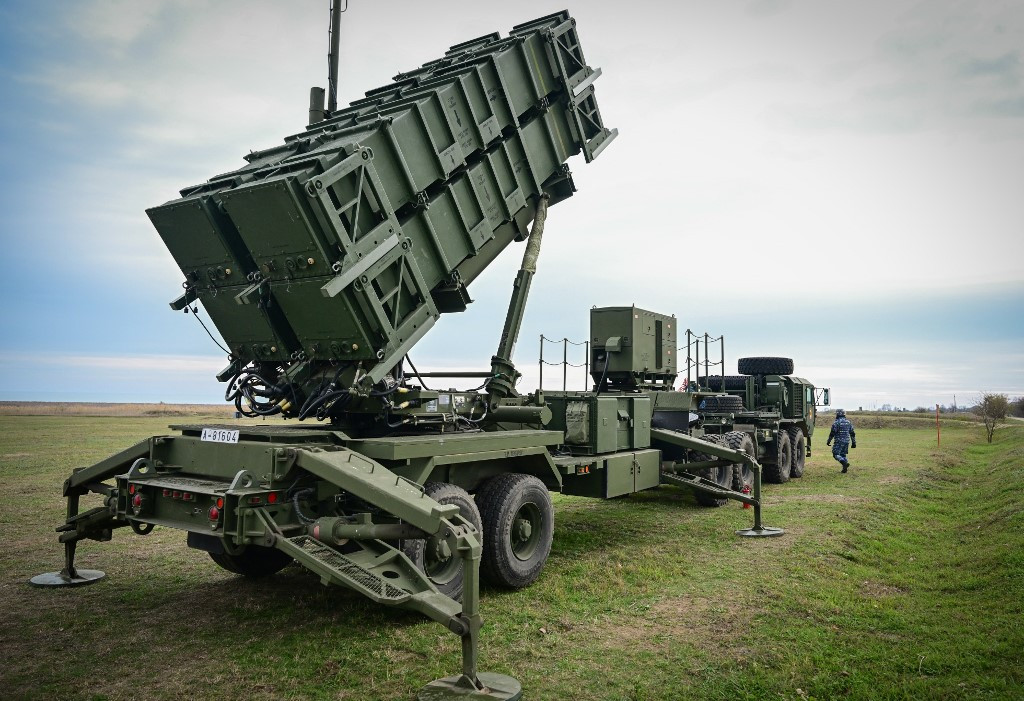
The United States has approved the sale of 500 Patriot PAC-3 missiles to Ukraine, at an estimated value of $2.1 billion.
The stakes are simple: approval does not mean air defense available tomorrow. From the available sources, the dominant scenario is delayed deliveries, against the backdrop of a production line that has not yet started. The article's thesis is that the real value of the agreement depends on the speed of production and any transfers from American stockpiles, not on the political signature. Uncertainty remains high, because the sources do not provide an official timetable. ## 1. What Washington announced and what Kyiv said
The State Department stated that the sale "will improve Ukraine's integrated air and missile defense capability." The statement, however, did not indicate a delivery date. Volodymyr Zelenskyy welcomed the decision but noted, in a post on X, that deliveries "can start ONLY IN A FEW YEARS." This quote must be confirmed directly from the post before publication. The Patriot is considered the most effective system against these threats, according to The Guardian. ## 2. The mechanism: from approval to interception
The causal chain has four links. The first is the sales approval, which opens a file but does not create stocks. The second is production: the missiles are described as "still to be manufactured," and two sources familiar with the decision say delivery is not expected until the second half of the 2030s. This claim rests on anonymous sources and must be treated as speculative until officially confirmed.
Ukraine will pay with contributions from Canada, Germany and Norway, channeled through the US Jumpstart program, together with national funds financed from the EU's Ukraine Support Loan. The State Department statement describes this structure but does not give amounts broken down by country. The US and European allies need the same interceptors, and stocks are limited. An intermediate solution could exist: transferring missiles already in the American arsenal, followed by replenishing the stock with new missiles.
Kyiv's Ministry of Defense favors this option, according to anonymous sources cited by The Guardian, but there is no official confirmation. ## 3. Counter-hypothesis: the approval is a political signal, not a transfer of capability
An alternative reading would hold that the main effect of the decision is political, not military. The approval shows that the American administration has not blocked the purchase and that Ukraine remains eligible for top-tier systems, even amid tensions between Kyiv and Washington. The tensions emerged after President Donald Trump announced a diesel deal with Russia and criticized Ukraine for attacks on Russian refineries. If this reading is correct, the strategic value of the agreement would be diplomatic rather than operational. It does not contradict the delay scenario but complements it: the political signal can exist even if delivery remains slow. The difference between the two readings shows up in the pace of deliveries, not in statements. ## 4. Scenarios and indicators
The dominant scenario, with an estimated probability between 40 and 60%, is the persistence of delay in a slow production chain. The consequence is that Ukraine remains short of interceptors in the medium term. The indicator to watch is an official delivery timetable published by the State Department or the Pentagon. A plausible scenario, with a probability of 20 to 40%, is acceleration through allied prioritization: transfer from existing stocks, followed by resupply. The consequence would be a rapid reduction in vulnerability to ballistic missiles.
The indicator is the emergence of an official decision on transfer from the US arsenal. A tail scenario, with a probability below 20%, is the blocking of the agreement because of bilateral tensions. The consequence would be that Ukraine seeks other sources, more expensive or less effective. The indicator is a change in financing conditions or the official suspension of the approval. ## 5. Implications for the European Union and Romania
For the EU, the case shows the limits of co-financing. If interceptors are lacking, member states are pressed to cover the shortfall from their own defense budgets or to buy similar systems. For Romania, as a NATO flank state, the question is how air defense is divided between its own needs and support for Ukraine. The available sources contain no figure on Romanian allocations for such systems.
This does not demonstrate a direct link to the Patriot agreement, but it confirms that pressure on the southern flank remains high. On the political agenda, presidential adviser Marius Lazurca called for a stronger American military and economic presence in Romania after meetings in Washington, according to Mediafax. The position should be read as a negotiating signal, not as an implementation decision. ## Method, definitions and figures
The figure of $2.1 billion and the number of 500 missiles come from the State Department statement, cited by the international press. The value is an estimate, not a definitively contracted sum. The probabilities in this article are internally calibrated ranges, not verified historical frequencies. No official delivery date appears in the sources consulted.
The claims about the 2030s come from anonymous sources and are marked as speculative. | Prediction | Horizon | Probability | How it is verified | Verification source | |---|---|---|---|---| | First PAC-3 delivery to Ukraine by 31.12.2027 | 2027 | 30–45% | Official delivery notification | State Department, Pentagon | | Transfer from US stock before end of 2026 | 2026 | 20–35% | Official transfer announcement | Department of Defense | | Suspension of approval due to bilateral tensions | 2026–2027 | below 15% | Amendment of export license | State Department |
Limits of the analysis
The analysis rests on a single main article and on press releases cited indirectly, so it cannot independently verify the figures, quotes or production timeline. An official delivery timetable, the breakdown of financing and data on available stocks are all missing. Changing the conclusion would require an official statement with a delivery date or a public decision to transfer from the American arsenal. Re-evaluation is useful upon publication of an official timetable or if the terms of the agreement change.
Sources
- SUA aprobă vânzarea de rachete Patriot către Ucraina în valoare de 2,1 miliarde dolari / Kievul va plăti folosind contribuţii din partea Can — G4Media
- SUA aprobă vânzarea către Ucraina a 500 de rachete Patriot PAC-3, în valoare de 2,1 miliarde de dolari — Financial Intelligence (RO)
- Cum folosește Putin istoria medievală pentru a-și justifica deciziile: între obsesie și strategie de stat — Digi24
- INTERVIU EXCLUSIV Un cunoscut psiholog american vorbește despre „declinism”, un cuvânt care sună pretențios, dar care se potrivește 100% sit — HotNews.ro