GEOPOLITICA
Vučić's resignation — why he leaves now in order to stay, where Serbia is heading, and what it means for Romania

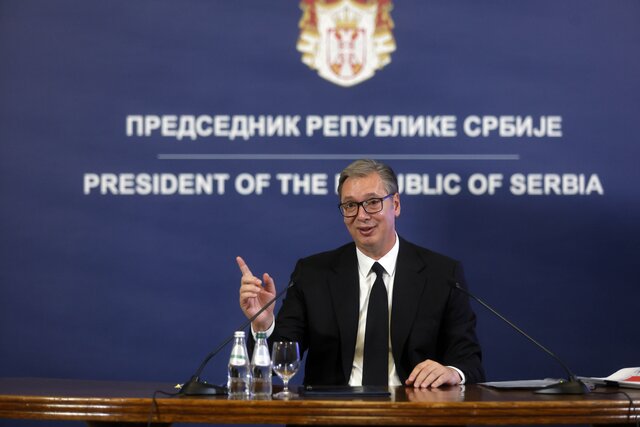
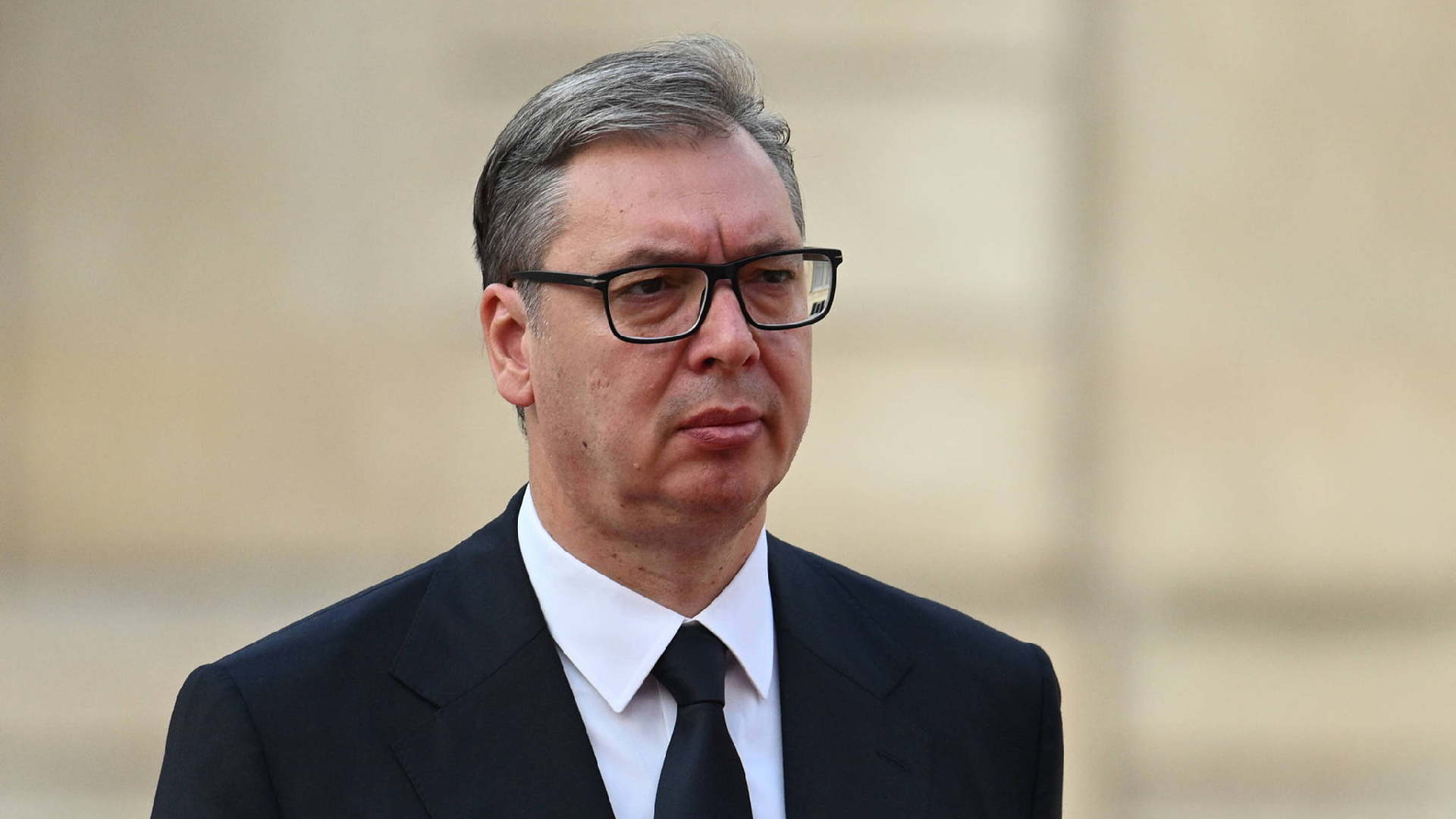
Aleksandar Vučić resigned on Saturday, 27 September 2026, as president of Serbia, seven months before the end of his term, and is leading his party's list into the snap parliamentary elections of 25 October, where he is aiming for the post of prime minister.
The stake is not one man's departure but the direction test of a country caught between the European Union and Russia, Romania's direct neighbour along roughly 546 kilometres of border. A politician who has dominated Serbia since 2012 is moving his power from one palace to another, under pressure from the largest protest movement in the country's modern history.
The verifiable thesis of this article: the resignation is a manoeuvre to preserve power, not a capitulation, and for Romania the outcome matters less than it seems — the big bilateral files, gas, electricity, the road and the railway, rest on structural reasons that any government in Belgrade will keep. The real risk is one of calendar: a Serbian electoral year that postpones signatures, not one that breaks projects.
The timeline: from the Novi Sad canopy to leaving the palace
On 1 November 2024, the concrete canopy of the Novi Sad railway station, renovated only months earlier, collapsed onto the people on the platform and killed 16. Students turned mourning into a movement: the opposition, the universities and civic groups read the tragedy as a symptom of corruption in big infrastructure contracts, according to Al Jazeera.
The chain of resignations started from below: two ministers in November 2024, then prime minister Miloš Vučević on 28 January 2025. In March 2025, Belgrade saw the largest demonstration in Serbia's modern history, with up to 325,000 participants by independent estimates. Vučić held out for a year and a half with a technocrat prime minister, the endocrinologist Đuro Macut, installed in April 2025.
On 27 June 2026 the president announced he would resign "within weeks" and that the country would hold early elections, according to CNN. The weeks became three months: on 9 September he called the parliamentary vote for 25 October, and on 27 September, from the presidential palace, he announced: "I am resigning as president. Tomorrow morning I will hand over my duties to the speaker of parliament," according to France 24.
Among his final acts in office: pardoning 49 people, 23 of them convicted in connection with the protests, according to ABC News. A gesture of reconciliation on paper, read by the street as a belated admission that the trials had been political.
Why he leaves now: the constitutional arithmetic of staying
Serbia's constitution bars Vučić, elected president in 2017 and re-elected in 2022, from a third term. His current mandate was due to expire in the spring of 2027, and his real power — control of the party, of friendly television stations and of the state apparatus — never depended on the office anyway. The resignation lets him personally head the electoral list "Aleksandar Vučić — United Serbia" and, if his party forms the government, become prime minister: converting a mandate that was expiring into a new one.
The interim stays in the political family: the speaker of parliament, Ana Brnabić, prime minister between 2017 and 2024 and one of Vučić's most loyal allies, takes over the duties of head of state. The law requires the presidential election to be held within 90 days of the vacancy; Vučić himself promised a first round "by the end of December", according to Reuters, via US News.
The manoeuvre has a famous precedent in the region: the leader who changes office, not power. The difference from other rotations is that Vučić is doing it under pressure, not out of comfort — for the first time since 2010, independent polls have shown another political force in first place.
Who the challengers are and what the polls say
The 25 October elections allocate 250 seats, with a 3% electoral threshold and 126 seats needed for a majority. The students' list, "Student List — Students Win", born of the protest movement, is headed by Ilija Srdanović, a cardiologist and professor at the Faculty of Medicine in Novi Sad, and was registered in September after a march of thousands of supporters, according to Balkan Insight. Running separately are the pro-European alliance "European Serbia" (Marinika Tepić, Zdravko Ponoš), Ivica Dačić's socialists and Miloš Jovanović's national right.
| Poll | Published | SNS list (Vučić) | Student List | Others above threshold |
|---|---|---|---|---|
| CRTA (independent, fieldwork in June) | 15 July 2026 | 35.7% | 44.9% | — |
| NSPM | 30 July 2026 | 37.5% | 39.6% | SPS 4.9% |
| Faktor Plus (accused by the opposition of closeness to the government) | 21 September 2026 | 48.6% | 37.1% | SPS–JS 4.9%, European Serbia 3.6% |
The correct reading of the table is not "who leads" but how wide the gap between the pollsters is: 13 points of difference on the SNS score between CRTA and Faktor Plus, according to bne IntelliNews and the public polling record. The July CRTA survey was the first since July 2010 in which any list other than the SNS led a national poll. In a country whose electoral institutions are controlled by the ruling power, such dispersion announces a contested result almost regardless of the numbers.
The country's direction: three files that will not wait for the result
Russian oil in the economy. NIS, the company covering about 80% of Serbia's oil needs, is majority-owned by Gazprom Neft and was designated under American sanctions in January 2025; after successive waivers, the sanctions began to bite in October 2025. In January 2026 Hungary's MOL group signed a binding preliminary agreement for the Russian 56.2% stake, and in June Belgrade and MOL signed the shareholders' agreement, according to OSW and Balkan Green Energy News. The transaction awaits approval from the American sanctions authority; until then, the Pančevo refinery lives on short waivers.
EU accession, frozen but not dead. Serbia has been a candidate since 2012 and negotiating since 2014, but the last cluster of negotiating chapters was opened in December 2021. Brussels ties any thaw to fair elections and the rule of law — precisely the object of the domestic dispute. In parallel, the Jadar lithium project, declared strategic by the European Commission for Europe's batteries, is being challenged by Serbian environmental groups including before the Court of Justice of the EU, since July 2026, according to Geopolitical Monitor — a file in which Belgrade negotiates with Brussels from both sides of the table.
The Expo 2027 shop window. Belgrade hosts the specialised exhibition Expo 2027, Vučić's flagship project, under the theme "Play for Humanity — Sport and Music for All". Whoever governs after 25 October inherits its construction sites, contracts and deadlines — exactly the kind of large public works that ignited the protests.
What it means for Romania
Bucharest and Belgrade are going through simultaneous transitions of power: Romania votes on its Mureșan government on Wednesday, 30 September, after president Nicușor Dan designated the MEP on 17 September, according to Digi24. As of writing we found no official reaction from Bucharest to Vučić's resignation — then again, few capitals have commented on an event that changes the office, not the man.
Romania's capital in Belgrade is structural, not personal. Romania is one of the five EU countries that do not recognise Kosovo's independence, a position every Serbian government values. Bilateral trade reached 2.367 billion euros in 2024, with a Romanian surplus of 20.1 million euros, according to the Romanian Ministry of Foreign Affairs, and electricity is among the top traded goods — the two grids are directly linked, and the Iron Gates hydropower plants have been jointly operated since the first was inaugurated, in 1972.
The sensitive file remains the Romanian minority: at the 2022 Serbian census, 23,044 people declared themselves Romanian and 21,013 Vlach, in Vojvodina and the Timok Valley. As far back as 2012 Romania tied Serbia's European path to the rights of this community, and the joint intergovernmental commission on minorities, active since 2009, is the instrument through which Bucharest can ask a new government — whichever it may be — for schooling, church services and media in Romanian in the Timok area.
For Romania, a Belgrade that exits its crisis through elections, even imperfect ones, is preferable to one that exits through repression: prolonged instability south of the Danube would hit exactly the transport and energy corridors the two countries are building together.
The joint projects: gas, the kilowatt, the road and the train
Gas. The Petrovaselo–Comloșu Mare–Mokrin interconnector, agreed in a memorandum signed on 5 August 2024 by energy ministers Sebastian Burduja and Dubravka Đedović Handanović, links Romania's BRUA pipeline to Serbia's Mokrin hub: a minimum of 1.6 billion cubic metres per year, in both directions, with 86 kilometres on Romanian territory and 13 on the Serbian side, according to Balkan Green Energy News. Serbia is targeting completion in 2027, Romania by 2028 at the latest. The strategic sense is plain: from 2027, Romanian gas from Neptun Deep — a 4-billion-euro investment that will double Romania's output — becomes Belgrade's first real alternative to Russian gas.
The kilowatt. Beyond the joint Iron Gates hydropower plants, in 2024 the two ministers also discussed participation in Đerdap 3, Serbia's pumped-storage hydropower project — the kind of grid-scale battery both power systems need as solar and wind grow.
The road. The Timișoara–Moravița motorway, 73 kilometres on the Romanian side, towards Belgrade, has had the tenders for its first two sections running since the autumn of 2024; at the last publicly reported stage, the contractor for section 2 had been selected but no contract signed, while section 1 was still under evaluation, according to Economica.net. The sore point is at the border: Belgrade would like Romania to fully fund the new border crossing point, a dispute the Romanian side has made public.
The train. Restoring the direct passenger train Timișoara–Vršac–Belgrade was discussed again in August 2026, in Timișoara, with the authorities citing "the last technical and procedural aspects" between the railway operators, according to Știrile Transilvaniei. It is the smallest project on the list and precisely for that reason the best test: if not even a regional train can start running in an electoral year, the motorway's and the pipeline's calendars must be read with the same caution.
The counter-hypothesis: what would change if Vučić loses
A government of the students' list, alone or with "European Serbia", would change the tone — more firmly pro-European, less dependent on the balancing act towards Moscow — but not necessarily the concrete files with Romania. Energy diversification was forced by American sanctions, not by convictions; the gas pipeline, the motorway and the train were negotiated by ministries and state companies, not by the presidency. The students' list is, moreover, a heterogeneous protest coalition without a detailed foreign policy programme: its first months would be consumed by domestic justice — the Novi Sad case — not by foreign affairs.
What could nevertheless slow things down: a new government re-auditing the big infrastructure contracts — the natural reflex of an anti-corruption movement — could catch the projects with Romania in its net too, not because they are suspect, but because they are large.
Scenarios
Dominant scenario: Vučić changes palaces, not power. Trigger: the SNS list comes first on 25 October and forms the government with the socialists and the minority lists. Constraint: even victorious, the SNS loses its aura of invincibility, and the street does not dissolve. Consequence: Vučić as prime minister, a party candidate at the December presidential vote, protests reignited at every misstep. Indicator: the official result published by the RIK electoral commission and Vučić's nomination as prime minister.
Plausible scenario: the street wins the ballot box. Trigger: record turnout, and the students' list repeats CRTA's summer scores. Constraint: a student–pro-European opposition coalition government cohabits with institutions still staffed by the SNS. Consequence: a cautious thaw with Brussels, a re-audit of the big contracts, pragmatic continuity on the files with the neighbours. Indicator: the students' list above 40% in the official result.
Tail scenario: a narrow result, a street crisis. Trigger: a difference of a few points between the top two lists, with documented fraud allegations. Constraint: neither camp concedes defeat, and international observation missions become the de facto referee. Consequence: prolonged deadlock, EU pressure, a freeze on economic decisions — including the calendar of the projects with Romania. Indicator: protests of over 100,000 people after election day and the opposition's refusal to take up its seats.
Verifiable predictions
| Prediction | Horizon | Probability | How it is verified | Verification source |
|---|---|---|---|---|
| The "Aleksandar Vučić — United Serbia" list wins the most seats at the 25 October elections | 25.10.2026 | 50–65% | The electoral commission's official result | RIK (rik.rs), international press |
| Vučić is nominated prime minister and confirmed by the new parliament | by 31.01.2027 | 45–60% | The investiture vote in the National Assembly | parlament.gov.rs, Reuters |
| The first round of the presidential election takes place by the end of the year | by 31.12.2026 | dominant scenario | The calling and holding of the vote | RIK, Serbian press |
| The MOL–Gazprom Neft transaction for the 56.2% NIS stake receives American approval | by 31.03.2027 | 40–60% | Statement by MOL, NIS or the US Treasury | mol.hu, nis.rs, treasury.gov |
| The contract for at least one section of the Timișoara–Moravița motorway is signed | by 30.06.2027 | 40–60% | Official signing announcement | CNAIR, the Transport Ministry |
| The Romania–Serbia gas interconnector enters service | by 31.12.2028 | 30–50% | Commissioning announcement and commercial flows | Transgaz, Srbijagas |
Method, definitions and figures
The resignation. The announcement was made on Saturday, 27 September 2026; the handover of duties to the speaker of parliament was announced for the morning of 28 September. The quotes from the speech are those relayed by France 24 and Reuters from the Belgrade broadcast.
The polls. The CRTA figures (fieldwork in June, published 15 July), NSPM (30 July) and Faktor Plus (21 September, sample 986) are taken from the public polling record for the 2026 elections and from the reporting of bne IntelliNews and Vreme. The accusation of closeness to the government against Faktor Plus and Ipsos belongs to the Serbian opposition and independent media; we keep it as a reading warning, not as an established fact.
Trade and the minority. The 2.367 billion euros (2024), the 20.1-million-euro surplus, the 23,044 Romanians and 21,013 Vlachs (2022 census) are the figures of the Romanian Foreign Ministry's bilateral relations file.
The projects. The gas interconnector's parameters (1.6 billion m³/yr, 86+13 kilometres, 2027–2028 targets) are from the ministerial announcement of 5 August 2024. The 73 kilometres and the tender stage of the Timișoara–Moravița motorway are from the Romanian business press; the stage may change without public notice. Neptun Deep: a 4-billion-euro investment, with first production expected in 2027, per the OMV Petrom and Romgaz announcements.
The probabilities. The bands in the table are editorial estimates in ranges of at least ten percentage points, without calibration against a track record; they show the order of magnitude of confidence, not a measured frequency.
Limits of the analysis
The analysis rests on the international and Serbian press of 27–28 September, on the public polling record and on the official Romanian documents cited. We had no access to internal party polling, to the full text of the resignation speech or to the up-to-date, unpublished stage of the road tenders. The Serbian political scene moves weekly: scores and even the candidate lists may change before 25 October.
The diagnosis would be invalidated by a decisive victory of the students' list followed by an explicit break with the projects with Romania, by a cancellation or postponement of the elections, or by Belgrade turning back to Russian gas after a possible collapse of the NIS transaction. The natural reassessment comes on the evening of 25 October, with the first official results.