POLITICA
Ramaswamy's Ad and the Limits of Personal Attacks in the Ohio Campaign
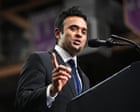
A campaign advertisement by Republican Vivek Ramaswamy, aired during the campaign for governor of Ohio, has been widely criticized after featuring the mother of Democratic candidate Amy Acton, who accuses her daughter of lying.
The ad was financially backed with 4 million dollars, according to campaign statements cited by the American press, and the election takes place on November 3, 2026.
The stakes are twofold. On one hand, the Ohio campaign risks shifting from economic and public service themes toward the personal lives of the candidates. On the other hand, the reaction of Vice President JD Vance, who asked Republicans to end their criticism, signals a line of attack the party could adopt in other campaigns as well. The thesis of this article is that the electoral effect of the ad depends less on its content and more on how moderate Republicans choose to distance themselves from it. Uncertainty remains high, because the public polls in the analyzed sources do not provide a direct measure of the impact.
1. What happened and the role of Amy Acton
Amy Acton is the Democratic Party candidate for governor of Ohio. She has spoken openly in the campaign about her childhood, spent partly in Youngstown, where she lived for a period without shelter and suffered sexual abuse. According to WYSU, court documents and police records show that her mother's husband, Cledith Arthur, was charged with sexually assaulting Amy Acton when she was 12 years old, and she and her brother were removed from his custody. Cledith Arthur left the state before being tried for these charges and died in 2004, while remaining married to Acton's mother. There is no judicial verdict confirming or refuting these allegations in the analyzed sources, and the information above is reported from press accounts of case files.
The ad launched by Ramaswamy features Acton's mother, Donna Arthur, who says her daughter "has lied her whole life." According to the Kenya Today/GDELT source, the ad does not mention the allegations against Donna Arthur's husband. Ramaswamy's campaign confirmed that the spot originates from its structure and announced it would spend 4 million dollars to broadcast it across the state. Acton responded publicly, saying the ad is "despicable" and that her mother "is not well," according to The Hill.
Acton's role in this story is twofold: she is the direct target of the attack and, at the same time, the person who made a painful personal subject public, which means her response may be perceived differently by the electorate. The sources do not show whether her communication strategy was planned in relation to the opponent's ad.
2. The mechanism: from the ad to the political cost for Republicans
The proposed causal chain is as follows: the opponent's ad generated a strong public reaction, the public reaction forced the party to take a position, and the party's position determines the political cost for candidates. Each link can be verified separately.
The first link is the public reaction. The sources show that the ad drew criticism from several Republicans in Ohio, including Senator John Husted, who said he would not have aired such a spot, and Secretary of State Frank LaRose, who expressed personal reservations, according to Kenya Today/GDELT. These positions suggest the ad does not have unanimous support within its own camp, although it is unclear how many voters give weight to these reactions.
The second link is Vance's decision to defend the ad. According to Axios, Vance said Republicans should stop "complaining" and described the criticism coming from within his own party as "a little disgusted." Axios interprets this position as part of a strategy of not yielding to pressure, a line Vance is also preparing for a possible presidential candidacy in 2028. This interpretation is an inference by journalists, not a verified fact.
The third link is the effect on voters. Here the chain becomes weaker. The sources contain no polling data measuring a change in voting intention after the ad aired, so it cannot be established whether the attack mobilizes the Republican base or repels moderate voters. What can be said with more confidence is that, in terms of money, the strategy is costly: 4 million dollars is a significant investment for a single spot, and its cost adds to the expenses already incurred for the campaign.
3. Counter-hypothesis: the ad could have a limited impact
An alternative explanation is that the controversy will be forgotten within a few days and the electoral impact will be small. The argument is that Ohio voters vote mainly on the basis of the economy, healthcare and taxes, and personal disputes rarely change the outcome at the state level. The WYSU source notes that several candidates, parties and political groups chose to enter or stay out of the controversy, which suggests the issue lacks consensus among the actors involved.
This counter-hypothesis cannot be fully rejected, but it has a limitation: the analyzed sources were written in the first week after the ad aired and do not cover the period that followed. The absence of post-spot polls makes a direct comparison between the two hypotheses impossible.
4. Scenarios and what comes next
Cluster analysis suggests three scenarios, which we present with calibrated probabilities and without treating them as certain predictions. The dominant scenario, with an estimated probability between 35 and 45%, is that the ad remains in circulation, Vance and other Republican leaders continue to defend it, and criticism from within the party persists. A plausible scenario, between 30 and 40%, involves a withdrawal or recalibration of the message, probably under pressure from moderate Republicans in key states. A tail scenario, below 25%, means the electoral impact remains limited and the controversy fades without changing the race.
There are three signals to watch: whether Ramaswamy spends more money on spots with the same content, whether other Ohio Republicans publicly declare their position on the ad, and whether the first polls from Ohio after the broadcast appear. The electoral calendar is tight: November 3, 2026 is more than 12 days from the article's date, leaving little time for a change of strategy.
5. Verifiable predictions
| Prediction | Horizon | Probability | How it is verified | Verification source |
|---|---|---|---|---|
| The Ramaswamy ad remains on air after November 1, 2026 | November 1, 2026 | roughly half | Absence of withdrawal of the spot from broadcast channels | Ramaswamy campaign statements; Ohio media archives |
Method, definitions and figures
The sources used are the articles in the listed news cluster, including The Hill, HotNews.ro, Axios, G4Media and the WYSU and Kenya Today materials from GDELT. The sum of 4 million dollars is the figure reported by the campaign and the American press, not verified in official finance reports, which are not accessible within this analysis. The probabilities in the scenarios section are internal estimates, not statistically calibrated, and should be read as ranges of judgment, not frequencies.
The term "moderate Republican" is used descriptively and does not correspond to an official category. The figure of 12 days between the article and the election is calculated from the publication date and the election date of November 3, 2026, without confirmation from the official calendar of the Ohio Secretary of State.
Limitations of the analysis
The analysis cannot establish the actual effect of the ad on the electoral outcome, because no polls published after the spot aired are available. Direct quotations from American sources are reproduced as they appear in secondary articles and must be verified against the original transcripts before publication. The allegations against Cledith Arthur come from press accounts of case files and not from judicial verdicts, and this distinction must be preserved. The hypothesis that Vance's strategy reflects a line for 2028 is an interpretation of a single source, Axios, and cannot be independently confirmed. The conclusions should be reassessed if post-spot polls from Ohio appear or if Ramaswamy withdraws the ad.