ANALIZA
The Trump–Xi dinner and its echo on Telegram: where the news ends and the noise begins
Three days after the state dinner hosted by the White House on September 24, 2026, a Romanian-language Telegram channel published 13 posts on the topic, the highest level observed in its series.
The stakes are not the summit itself, but the way a foreign news story penetrates the Romanian information space.
If attention fades within three to five days, the effect on Romanian public opinion remains negligible; if the topic is picked up by a broader ecosystem of channels, it can feed disinformation narratives ahead of a crowded electoral cycle.
This article's verifiable thesis: the rise in attention is, in the dominant scenario, a contagion effect of the international news cycle, not a coordinated campaign, and it dissipates within a 3–5 day window, with the caveat that any pickup by channels with significant Romanian audiences would invalidate this reading.
1. What actually happened: a summit, a dinner, and a technology agenda
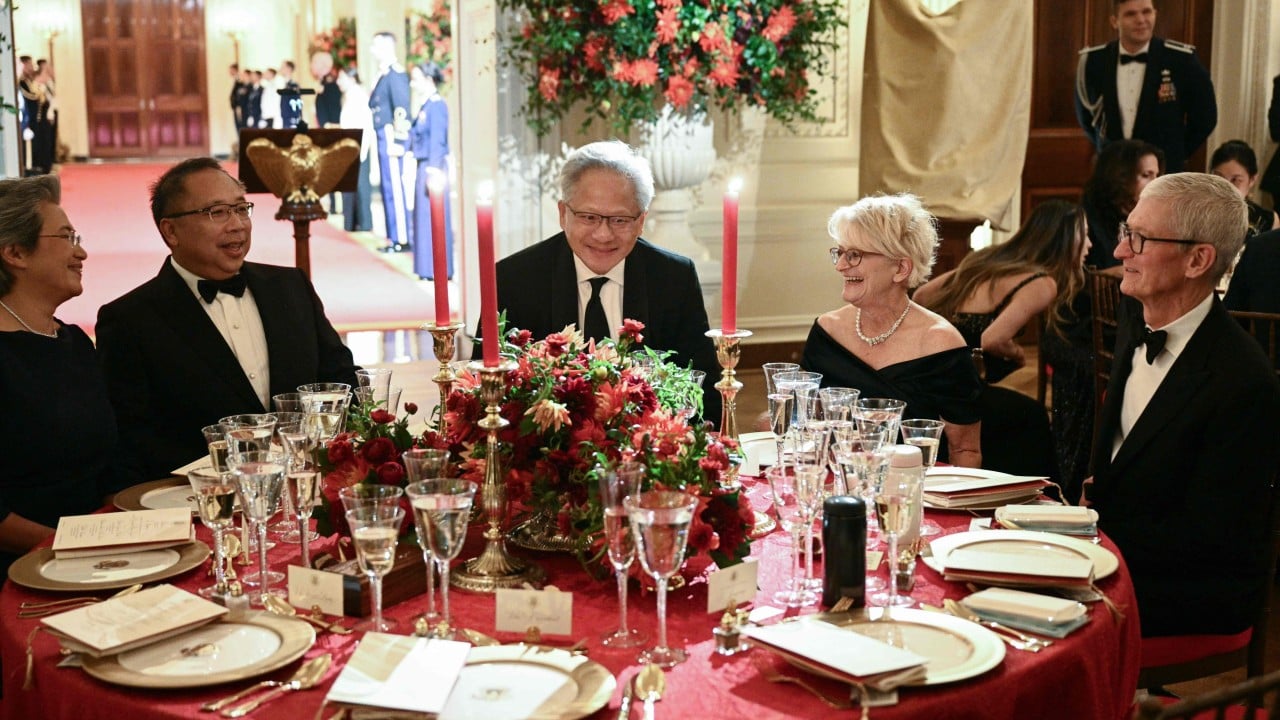
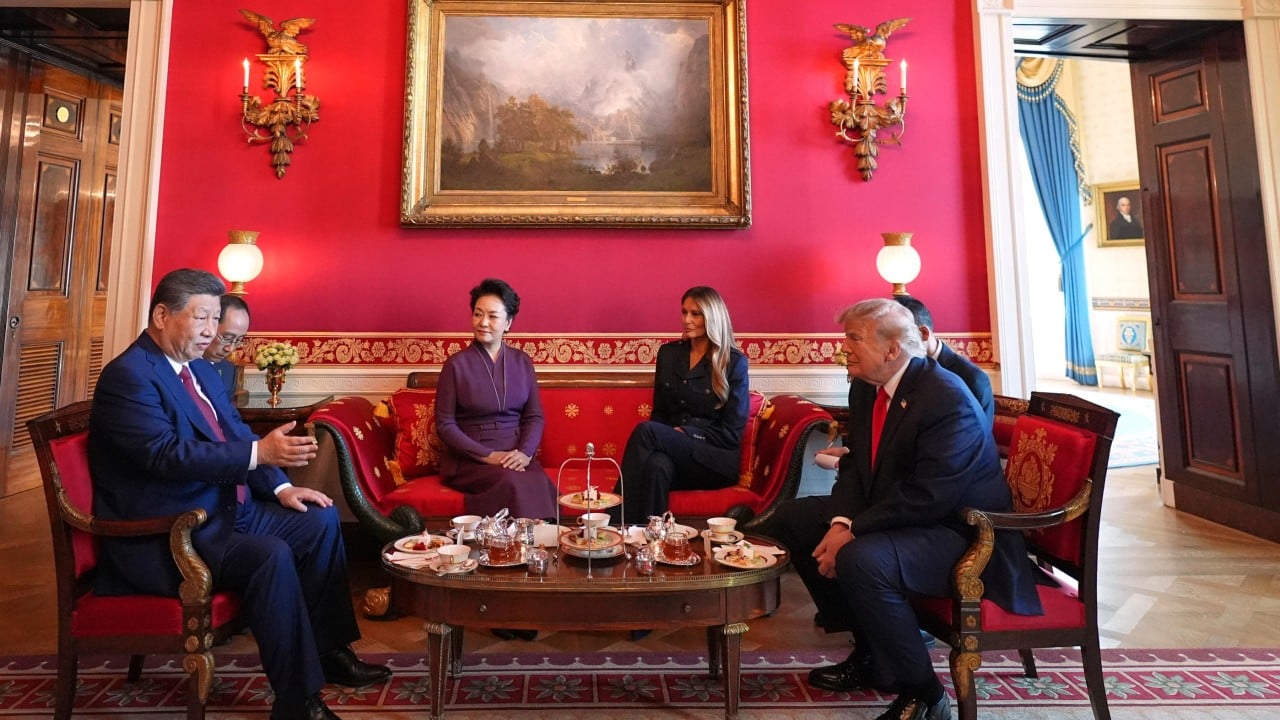
The triggering event is publicly documented. US President Donald Trump hosted Chinese President Xi Jinping at the White House on Thursday for a state dinner whose guest list included an unusually large number of technology industry leaders — the heads of Meta, OpenAI, Tesla and SpaceX and the founder of Amazon, according to The Hill. The White House operated here in a dual capacity: diplomatic stage and, simultaneously, an image generator for the global media cycle.
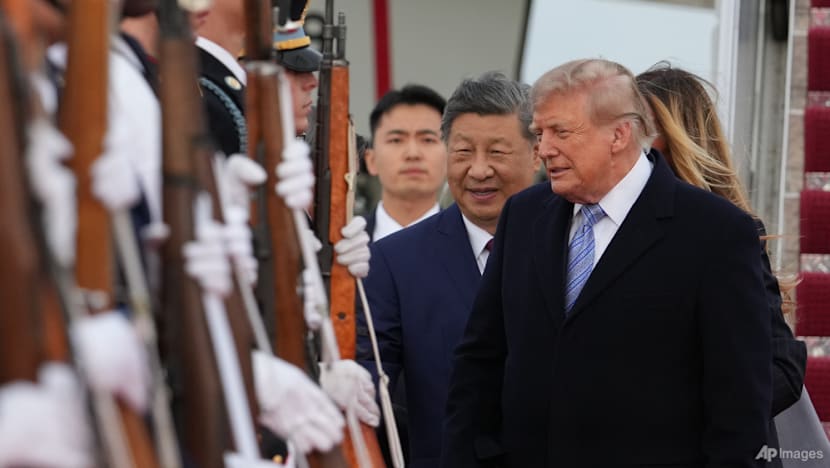
The welcome ceremony also produced the "soft" elements of the story. The US president's eldest daughter, Ivanka Trump, occupied a front-row seat at the White House welcome ceremony, wearing a dress by Chinese designer Guo Pei, alongside Vice President J.D. Vance, according to the South China Morning Post. The detail matters analytically for one reason only: such peripheral elements are exactly the ones that circulate fastest on social channels, regardless of the content of the negotiations.
The economic substance of the meeting was dominated by technology. Xi urged the United States to cooperate in the field of artificial intelligence, according to CNBC. The public balance sheet of the evening — what was agreed and what remained unresolved — was summarized by SCMP in its post-dinner analysis, without the sources documenting a signed agreement with direct effect on Romania.
Here ends the externally verifiable part and begins the part that relies on internal data. Monitoring of a Romanian-language Telegram channel shows 13 posts on the summit topic within a short interval, a peak with a standard deviation of 11.0 relative to the channel's series, and Google Trends places the topic at position 5 in Romania. These figures are internal signals, not independently verified facts; they indicate an acceleration, but do not explain its mechanism.
2. The mechanism: why attention is rising now, in social channels
The causal chain has three links, each with dated support. First link: the peak event. A Trump–Xi state dinner at the White House, documented by The Hill, is by construction an attention magnet — it combines two first-rank geopolitical actors with a Big Tech guest list that adds an angle of interest for audiences interested in markets and technology.
Second link: the structure of the news cycle. At that moment, the international agenda offered no strong competition from topics with direct resonance in Romania — wages, pensions, justice. A summit of this type fills the void: the global press covers it intensively, and aggregation and commentary channels pick up the material with a delay of hours, not days.
Third link: the attention economy on Telegram. A channel that lives on audience engagement has an incentive to publish repeatedly about the trending topic, even without original content. The 13 posts from a single channel are consistent with this behavior: volume, not coordination. The combined effect — peak event, agenda void, engagement-maximization logic — explains both the post peak and the position 5 in Google Trends Romania.
The alternative hypothesis must be weighed seriously: the amplification could be the first layer of a coordinated pro-Russian or otherwise-originated campaign, in which a peripheral channel tests a narrative before scaling up. Arguments in favor: Telegram remains the preferred channel of influence operations in Eastern Europe, and testing on small channels is a documented tactic in previous campaigns. Arguments against: a single active channel, no Romanian influence actors involved, no connection to the domestic agenda, and no repetition of a standardized message — the profile fits organic contagion better than a campaign. Based on the available data, the contagion hypothesis remains better supported, but it is not sufficient to rule out coordination; the difference can only be settled by observing whether other channels pick up the message in the coming days.
3. Who amplifies: one channel, no Romanian influence actors
The amplifier's profile is, for now, minimalist. The available data indicate a single active Telegram channel on the topic, with no identification of Romanian public figures relaying the theme. This is an important finding, not a mere absence of data: effective influence campaigns in Romania have historically gone through local nodes — opinion pages, commentator accounts, peripheral news sites. None appear here.
Without local nodes, the content remains a late translation of the global agenda. The posts about Ivanka Trump and the Guo Pei dress, reported by SCMP, or about the list of billionaires at the dinner, according to The Hill, are reproduction material, not original narrative production. A channel that reproduces does not amplify in an operational sense; it merely extends the tail of the news cycle.
The risk appears at the interface between reproduction and reframing. A post that reproduces a neutral news story can become a disinformation vector if it adds a framing — "Russia and China ally against the West," "The West is selling itself to China" — without factual support. The available sources do not document such reframing in the monitored channel; it remains unclear whether it will appear in the tail phase of the cycle.
4. Four possible trajectories and what decides them
The dominant scenario, that of attention fading, assumes the cycle dissipates within 3–5 days. Its engine is the natural exhaustion of the story; the constraint is the absence of Romanian influence actors; the consequence is zero effect on public policies or local markets. The indicator to watch: Google Trends Romania, where the term should drop out of the top 20 by early October 2026.
The plausible scenario of amplification through a pro-Russian ecosystem assumes the topic is picked up by already existing networks, with geopolitical reframing. The engine is the existing channel infrastructure; the constraint is the lack of a natural connection between the summit and standard pro-Russian narratives; the consequence is an increase in Romanian-language disinformation on Telegram and Facebook. The indicator: the appearance of the same framing formulation in at least three distinct channels in less than 48 hours.
The scenario of transfer onto the economic agenda assumes the topic survives through the technological angle — the AI cooperation publicly requested by Xi, according to CNBC, tariffs, supply chains. The engine is the business public's interest; the constraint is that this segment is small; the consequence is a longer but niche life for the topic.
The tail scenario, that of escalation into a coordinated campaign, is the least likely: it would require an external operational decision, resources, and a connection to the Romanian domestic agenda that current data do not show. The consequence would be pressure on the authorities — the SRI and the General Directorate for Protection Against Cybercrime — for public reporting. The decisive indicator: any official communiqué from these institutions mentioning a campaign related to the summit.
5. What Romania can do: measurements, not panic
For the Romanian authorities, the episode is primarily a test of procedure, not a threat. The instruments exist: the SRI monitors cyber and influence threats, and the DGLC has a mandate on disinformation. The correct reading of the episode is of the "calibration exercise" type: an attention peak with no local actors and no domestic connection is exactly the case where the authorities' public intervention would do more harm than the topic itself, granting free visibility to a peripheral channel. The doctrine of proportionality suggests passive monitoring and reporting only at the threshold of coordination. For the Romanian press, the lesson is different: the difference between republishing a global story and politically reframing it is exactly the line where it is decided whether a contagion episode becomes a campaign.
6. Verifiable predictions
| Prediction | Horizon | Probability | How to verify | Verification source |
|---|---|---|---|---|
| The summit-related term drops out of the Google Trends Romania top 20 | 05.10.2026 | 50–65% | Searching the term with the Romania filter, over the last 30 days | Google Trends (trends.google.com) |
| The monitored channel drops below 3 posts/day on the topic | 05.10.2026 | 55–70% | Counting the channel's public posts | The public Telegram channel |
| No Romanian institution (SRI, DGLC) issues a public communiqué about a campaign related to the summit | 31.12.2026 | 60–75% | Checking the institutions' press release sections | sri.ro, dglc.gov.ro |
| Identical reframing appears (repeated formulation) in at least 3 Romanian Telegram channels | 31.10.2026 | 10–20% | Comparing post texts across channels | Public Telegram channels, EEAS/DGLC reports |
| The topic survives only through the economic angle (AI, tariffs) in niche business channels | 31.10.2026 | 20–35% | The thematic distribution of remaining posts on the topic | Google Trends, public channels |
Method, definitions and figures
Telegram post series: the number of posts on the summit topic published by the monitored channel, per unit of time; a z-score of 11.0 means the peak exceeds the channel's historical average by 11 times the standard deviation — a statistical anomaly of volume, not proof of coordination. Google Trends rank 5: the term's position in the top of searches in Romania at the time of measurement; Trends measures relative interest, not absolute volume, and is sensitive to the chosen time window.
The probabilities in the table are editorial intervals, not measurements. "Dominant scenario" means the trajectory with the highest estimated probability, not a certain one. The external figures used — the date of the state dinner, the composition of the guest list, the ceremony detail, Xi's call for AI cooperation — come entirely from public sources linked in the text. The internal figures — 13 posts, z=11.0, Trends rank 5 — were not independently verified and should not be cited as established facts. They are not comparable with one another: they measure different units (posts, searches, statistical deviations)