GEOPOLITICA
Friedrich Merz and Ukraine: why public attention is growing now and how long it will last
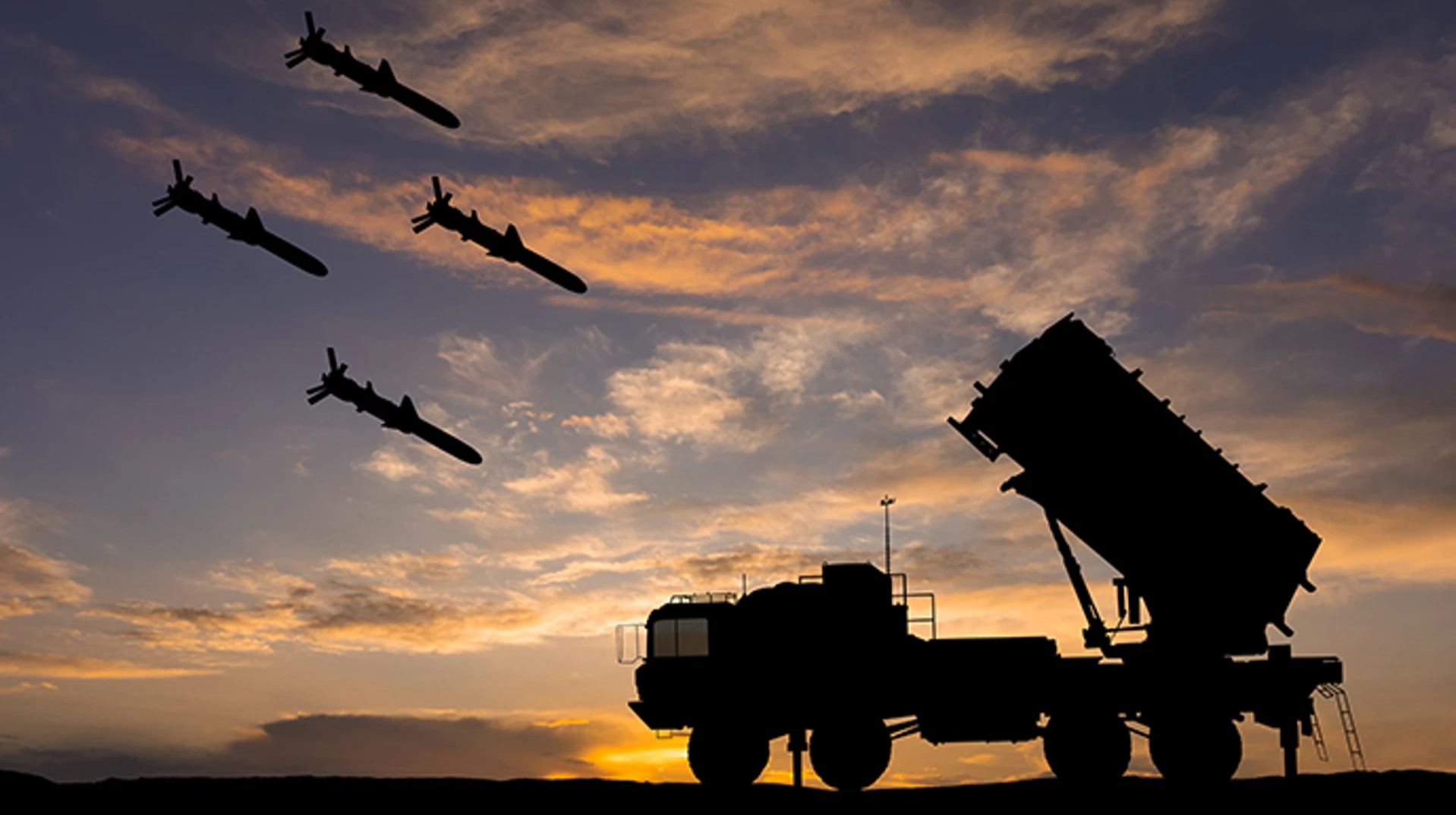
Germany has funded tens of thousands of interceptor drones for Ukraine, and the manufacturer Quantum Systems is expanding its capacities there, according to Tech.eu, on October 4, 2026.
The stakes are direct for Romania: German military support determines how much defense capability remains on the eastern flank, and Romania depends on this balance as a transit state and neighbor of Ukraine. The verifiable thesis of this article: public attention on Friedrich Merz, the German chancellor, is now rising on social channels mainly as an echo of German policy toward Ukraine, not as a genuine political wave of its own.
1. What is happening now: the numbers of public attention
The Friedrich Merz topic has entered a phase of accelerating attention in recent days on two active social channels. On Telegram, three posts on the German chancellor have appeared, and on Reddit two posts, within the same time window. In parallel, the associated search term has climbed to fifth place in the Google Trends ranking for that period. Three posts on Telegram and two on Reddit do not, by any measure of what is known about online attention dynamics, constitute a massive wave of opinion.
For comparison, topics that produce real political effects in the German-speaking space generate hundreds of posts on the same channels within the same window. The available figures suggest a tail phenomenon, not a front. A second element matters: the dominant headlines in the news feeds of the period are not relevant to the Merz topic.
The same feed contains, for instance, news about Kia Motors Corp ranking second in car sales in the United Kingdom in January–August 2026, with 76,850 vehicles sold and a 2.3% increase over the previous year, according to data from the Society of Motor Manufacturers and Traders cited by Korea Times and Yonhap.
The role of this company in the topic analyzed here is only that of an indicator of feed noise: the sources do not support any link between Kia and the attention on Merz.
2. The mechanism: why the topic is rising now
The causal chain supported by the data has three links. The first link: the German government has decided to fund tens of thousands of interceptor drones for Ukraine, and Quantum Systems, a German drone manufacturer, is expanding its operations on Ukrainian territory, according to Tech.eu. The second link: such decisions generate media coverage in English and German, which propagates into social channels within 24–72 hours. The third link: Telegram channels and geopolitically oriented Reddit communities pick up and reframe these news items, increasing the visibility of the chancellor's name.
Each link has a dated basis. The drone decision is documented by the technology press on October 4, 2026, in the same interval as the article about the collaboration between ARX Robotics and Roboneers on unmanned ground vehicles for the Ukrainian battlefield, according to Tech.eu. Propagation into social channels is a standard mechanism of the news cycle, not a peculiarity of this topic. The final link — the transformation of visibility into measurable attention — is the weakest in evidentiary terms.
The counter-hypothesis that the analysis must weigh is that the attention does not come from policy toward Ukraine, but from another trigger not identified in the available data. The sources provided contain no statement by Merz, no internal German decision, and no dated German political event that would directly explain the increase. This hypothesis cannot be excluded; it is simply less supported by evidence than the Ukrainian chain, because the only dated and relevant news items in the feed are those about German military support.
A second counter-hypothesis is the aggregation effect: searches for "Merz" may rise for banal reasons, such as the appearance of the name in non-political contexts. The available data do not allow these components to be separated. It remains unclear what share of the attention comes from foreign policy and what share from generic noise.
3. Who amplifies: prediction markets and anonymous chats
A less visible but documented amplification channel is that of elite prediction markets. Financial Times described, in an investigation picked up by HotNews.ro, an anonymous group called "Alfa," which communicates in a closed chat and wins millions of dollars betting on world events; an Oxford student made $750,000, and a 25-year-old Russian mathematician with a doctorate won comparable sums. Such communities react quickly to geopolitical news and can indirectly amplify attention on actors such as Merz.
The amplification mechanism through prediction markets differs from that of classic social networks. Where Telegram and Reddit spread content, prediction markets turn events into quotations, and the quotations themselves become news. A contract on the topic of German support for Ukraine, for example, makes the chancellor's name more frequently searched. The available data do not, however, show that the "Alfa" group has active positions on this topic; the connection remains a structural plausibility, not an established fact.
Amplification can also come from the opposite direction: from critical reactions to German policy. Public discourse on support for Ukraine is polarized in Germany, and every funding decision produces both praise and criticism from the opposition and from skeptical segments of opinion. A balanced analysis must acknowledge that increased attention can mean both pro-support interest and contestation; the available data do not allow the two to be separated.
4. What the scenarios say: from fading to prolonged amplification
The first scenario, the dominant one, is that of short-lived attention that fades. The driver is the small absolute volume of posts; the constraint is the absence of a new event; the consequence is zero impact on public policies, with only informational noise for citizens and no change for companies. The indicator to watch is the term's position in Google Trends: if it drops out of the top 20 within two weeks, the scenario is confirmed.
The second scenario, plausible, is amplification through echoes related to Ukraine. The driver is the continuous stream of German military support decisions, already documented on October 4, 2026; the constraint is the budgetary and political capacity of Merz's coalition; the consequence is a Romanian public debate about German support for Ukraine and rhetorical pressure on Romania's transit position. The indicator: new official announcements from Berlin regarding drones or unmanned vehicles.
The third scenario, a tail one, is the attachment of a conspiratorial narrative of the kind found in anonymous chats such as "Alfa." The driver is the appetite of closed channels for hidden explanations behind support decisions; the constraint is the absence of any verifiable element supporting such a narrative; the consequence is short-term informational pollution. The fourth scenario, unlikely, is prolonged coverage by traditional media, with the topic turning into a campaign theme.
For Romania, this scenario would have the clearest rhetorical effect: pressure on the country's position in transit corridors and on the continuity of support for Ukraine.
5. What comes next for Romania and the eastern flank
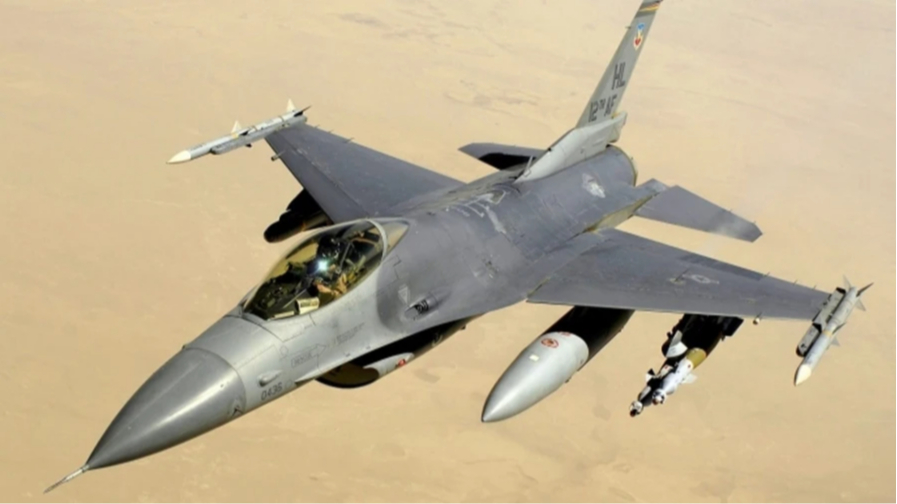
For Romania, the significance goes beyond online noise. German support for Ukraine, including through interceptor drones and unmanned ground vehicles, directly affects the security calculus of the Black Sea and NATO's eastern flank. A Germany more militarily engaged in the East reduces pressure on American resources and consolidates the logistics corridors passing through Romania. This is a structural inference, not a proven effect of current decisions.
The secondary economic effects are nevertheless measurable. The expansion of German defense technology manufacturers in Ukraine and the region can generate flows of trade, maintenance, and training that pass through Romanian infrastructure. The available data do not yet quantify these flows for Romania; it remains unclear whether the Quantum Systems expansion has a Romanian component. The sources do not mention any operations of the company in Romania.
The rhetorical risk for Bucharest is the one described by scenarios two and four: a public debate about German support can become, in the absence of data, ground for domestic political positioning. A balanced analysis must note that both supporters and critics of German support can exploit the topic; the available data do not yet show such exploitation in the Romanian public space.
6. Verifiable predictions
| Prediction | Horizon | Probability | How to verify | Verification source |
|---|---|---|---|---|
| The term associated with Merz drops out of the Google Trends RO top 20 by 31.10.2026 | 4 weeks | 40–50% | Position in the weekly ranking | Google Trends |
| The topic of German support appears in Romanian public debate (at least 10 articles in the national press) by 31.12.2026 | 3 months | 25–35% | Counting articles in press archives | Agerpres |
| No Romanian public policy measure directly related to this wave of attention by 31.12.2026 | 3 months | 70–85% | Monitoring Government and Parliament decisions | The portfolio of decisions published on the Government's website |
7. Method, definitions and figures
The attention data used in the first section come from aggregations of posts on Telegram and Reddit and from the Google Trends ranking, in the window immediately preceding the drafting of this article; they describe observed volume, not sentiment or impact. The small absolute volume limits the strength of any statistical conclusion. The figure on Kia sales in the United Kingdom (76,850 vehicles, January–August 2026, +2.3%) comes from Society of Motor Manufacturers and Traders data cited by Korea Times and Yonhap, and is used only as an example of feed noise, not as relevant evidence for the topic.
The scenarios and their probabilities come from an unpublished internal estimate, formulated as intervals of at least 10 percentage points. These intervals are not calibrated on historical frequency series; they express editorial plausibility, not measured frequencies. Any reader wishing to verify the predictions should use the public sources indicated in the table, not the internal estimates.
The series "interceptor drones funded by Germany" designates the German funding program described by Tech.eu on October 4, 2026; it does not include other German military support programs (artillery, air defense), which are not quantified in the available sources. The figures are not comparable across sources: Tech.eu describes funded units, not delivered ones, and the distinction between funded, produced, and delivered is not clarified in the sources.
8. Limitations of the analysis
The analysis cannot establish what share of the increased attention on Merz comes from policy toward Ukraine and what share from other unidentified triggers; the available data contain no statements by the chancellor or dated German political events that would directly explain the increase. The absolute volume of posts — three on Telegram, two on Reddit — is too small for any robust statistical conclusion, and the dominant headlines in the feed are irrelevant to the topic.
The diagnosis would be invalidated if the term remains in the Google Trends top beyond two weeks without new German support decisions, which would indicate an attention driver not identified here. Reassessment should be triggered by any official announcement from Berlin regarding military support for Ukraine or by the appearance of the topic in Romanian public debate. The attention figures and the scenario probabilities depend on unpublished internal data, not on independently verifiable sources, and this dependence is the most fragile hypothesis of the analysis.