POLITICA
Israeli Markets and the Bet on Netanyahu's Defeat: What the Numbers Show and What They Don't

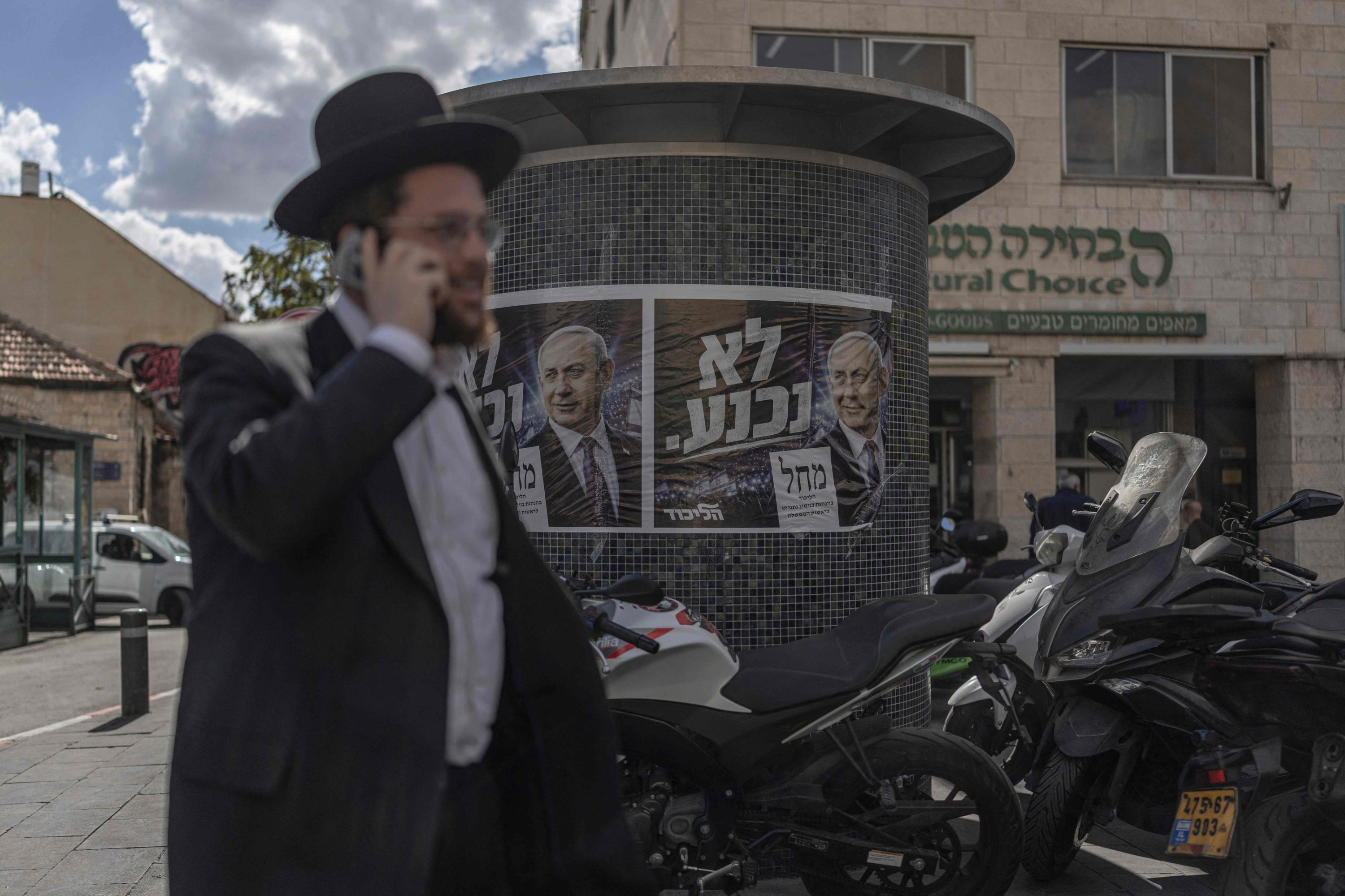
The bloc backed by Benjamin Netanyahu won 53 of 120 seats in the 27 October 2026 elections, according to the final count of the Central Electoral Commission.
The stake for markets is simple: a defeat for the prime minister could reduce Israel's risk premium. The dominant scenario, however, is a parliamentary deadlock rather than a rapid change of government.
Investor expectations rest on three observations. The first is the performance of the Tel Aviv stock exchange, which has risen 130% since the Hamas attacks of 7 October 2023, compared with an 80% gain on Wall Street, according to The Hindu. The second is the appreciation of the shekel, by 25% over the same period. The third is a JPMorgan estimate that the currency could move by up to 3% depending on the outcome. These figures come from the press and must be confirmed against official series from the Bank of Israel or the stock exchange before publication.
What the official election figures say
The electoral result is the most important starting point. Geopolitical Futures describes a hung Knesset in which Netanyahu's bloc holds 54 seats, seven short of the governing majority, while the opposition led by former army chief Gadi Eisenkot holds 48. The Arab parties, with 18 seats, appear as possible arbiters. The one-seat gap, 53 versus 54, must be closed on the CEC's official website before publication.
Turnout of 77.7%, the highest in two decades, is cited by the same material. If the article claims a record, the CEC's historical series must be included. Without it, the figure remains a press claim. The Hill adds that Likud was expected to win 26 seats, and that Netanyahu's coalition is approaching a majority without clearly reaching it.
The mechanism: from parliamentary deadlock to risk premium
The causal chain has three links. First: the absence of a majority of 61 seats produces lengthy negotiations or even new elections. Second: the negotiations depend on small parties, including the Arab ones, whose conditions concern the budget and security policy. Third: political uncertainty translates into risk premiums for bonds and the currency. The effect on markets is plausible but not demonstrated, because other factors, such as the technology sector and the global artificial intelligence boom, explain part of the rise.
The counter-hypothesis deserves serious weight. If markets have risen mainly for structural reasons, namely technology, defence and currency appreciation, then a change of government would have a limited effect. The Hindu notes that investors remain optimistic even in a scenario where Netanyahu is re-elected, which suggests that the defeat premium is only part of the pricing. Defence spending of nearly 8% of GDP, cited by the same source, must be verified against data from the Ministry of Finance or the Israeli Central Bureau of Statistics.
An additional argument comes from analysts' statements. Charlie Robertson of Equity Bank says the outcome matters for the region, because a re-election of Netanyahu could raise the risk of escalation with Iran, while a defeat would ease tensions. This reasoning is plausible, but it remains one analyst's opinion, not a measured fact.
Actors and their positions
Benjamin Netanyahu, the incumbent prime minister, leads Likud and the right-wing bloc. According to Moldova 1, he accused the Arab parties of fraud, while the opposition denounced an attempt to undermine the results. This accusation is not verified in the available sources and must be presented as a political position, not as a fact.
Gadi Eisenkot, former Chief of the General Staff of the army, leads the opposition and plays the main role in forming a governing alternative. Sources from Geopolitical Futures and The Hill place him as Netanyahu's direct rival, without detailing which party label he represents in the negotiations. Isaac Herzog, the President of Israel, receives the complete official results on 4 November and will then consult the parties before designating a candidate for prime minister. This timeline is recorded by the Moldova 1 source, but is not independently confirmed in the available sources.
The Arab parties, with 18 seats, can decide the formation of the government without necessarily entering a formal coalition. Defence24 argues that they could be the decisive factor, but does not detail their conditions. Ben-Gvir and Smotrich, far-right ministers cited by The Hindu, are mentioned as possible pressure factors: investor Bill Ackman says a government without them would signal a change of direction.
Scenarios and what comes next
The dominant scenario, with an estimated probability between 40 and 60%, is a prolonged deadlock in which no coalition immediately gathers 61 seats. A second scenario, with a probability between 20 and 40%, involves Netanyahu rebuilding a narrow majority. A tail scenario, with a probability below 20%, involves an opposition coalition supported by the Arab parties. These ranges are analytical estimates, not measured data.
The signals to watch are concrete. The first is the publication of the final results by the CEC, with the definitive composition of the Knesset. The second is the designation of a candidate by President Herzog. The third is any mention of a date for new elections. The fourth is the movement of the shekel and risk premiums after these moments.
| Attribute | Dominant scenario (deadlock) | Narrow re-election scenario | Opposition coalition scenario |
|---|---|---|---|
| Estimated probability | 40–60% | 20–40% | below 20% |
| Effect on risk premium | Prolonged uncertainty | Risk of escalation with Iran | Probable decline in the premium |
| Signal to watch | Delay in designating the prime minister | Support from small parties | Support from the Arab parties |
Method, definitions and figures
The seat figures come from the press, not from the CEC's official publication, and the 53/54 gap remains open. The 77.7% turnout and the gains in the stock exchange and the shekel come from press articles, not from official statistical series. The probabilities are analytical estimates and should be understood as ranges, not point values. Their calibration has not been statistically verified.
Limits of the analysis
The analysis cannot establish with certainty who will form the government, because the negotiations are not yet public. The financial figures cited come from the press and should be replaced with official series from the Bank of Israel and the stock exchange. If the CEC's final result substantially changes the composition of the Knesset, the conclusions about the scenarios must be reassessed. Reassessment is also necessary when the president designates a candidate, or when new elections are announced.