GEOPOLITICA
Rubio in Uzbekistan: What the Visit Reveals About US–China Competition for Central Asia
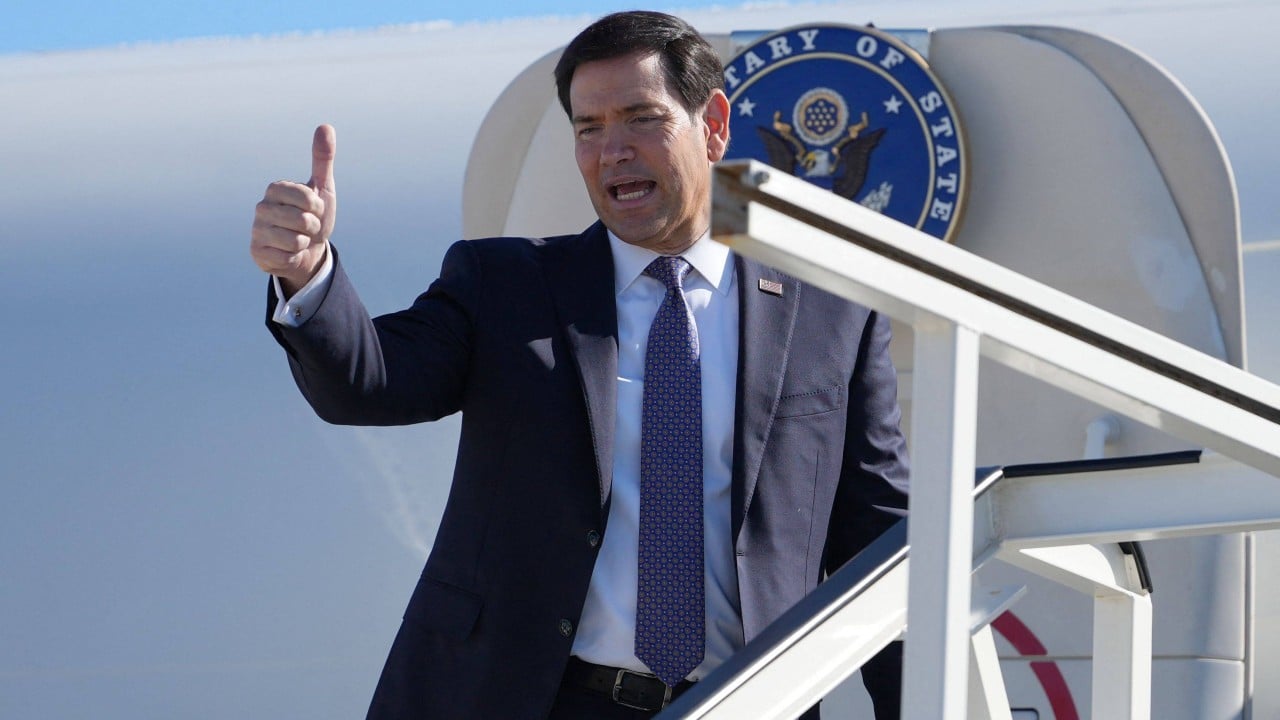
US Secretary of State Marco Rubio concluded a visit to Samarkand, Uzbekistan, on 19 October 2026, where he held talks with the foreign ministers of the five Central Asian states, after Uzbek media reported at least 54 business agreements worth $12 billion, citing the Ministry of Investment, Industry and Trade of Uzbekistan (Oil Price). The figure comes from Uzbek official sources, not independent verification, and American sources do not individually confirm each agreement.
The question is whether these figures signal a shift in the position of the states in the region or merely an intensification of ordinary diplomatic competition. The dominant scenario, estimated at 45 to 55% in internal analysis, is one of contested influence without a clear winner: both powers increase their economic presence, while local governments maintain their room for manoeuvre. A less probable alternative is a strategic US pivot with visible Chinese counterbalancing. The thesis of this article is that, on the basis of the available source, the announced commitments are more a political signal than a measurable redistribution of economic influence in the coming year.
1. What happened in Samarkand
The American press presented Rubio's visit as part of a diplomatic and commercial offensive. According to Kyiv Post, the Secretary of State travelled to Central and South Asia with a delegation of 200 business leaders, with the declared objective of advancing commercial diplomacy and securing alternative supply chains for energy and rare minerals. In Samarkand, he took part in a C5+1 ministerial meeting with the five states of the region, a format which, according to the same source, aims to counter Chinese commercial expansion and reduce Russian leverage.
The press described the meeting in a more restrained tone than official communiqués. The Straits Times notes that the visit produced few concrete public results, but that American officials present it as a key opportunity to extend American soft power. Modern Diplomacy makes the same observation: the visit is seen by US officials as an occasion to increase American influence, although it has produced few visible results. The difference between the two readings, the American and that of independent observers, is important for interpreting the whole episode.
An additional element is the American political context. Oil Price mentions that Rubio has intensified his foreign travel, including to Europe and Latin America, in the midst of the campaign for the Congressional midterm elections scheduled for 3 November 2026 ([olivLaw internal calendar](#)). Management of the Iran, Ukraine and Gaza files has largely been left to special envoys Steve Witkoff and Jared Kushner, which suggests that Rubio is assuming, in this period, the role of economic and regional representation.
2. The actors and what they want
The central role is played by Marco Rubio, US Secretary of State, who led the business delegation and conducted the political discussions. The administration in Washington, through the State Department, presents the visit as a gesture of goodwill towards the states of the region and as part of a long-term relationship. A department official stated that Rubio demonstrates Washington's goodwill towards "deepening partnerships" with the states of the area (Oil Price). This formulation is official self-presentation and should be read as such, not as evidence of actual effect.
The United States appears as an actor in a competition with China, which the sources describe in terms of economic influence. The available material contains no direct Chinese statement about the episode, so Beijing's position is known only through the context described by the press. The Republic of Uzbekistan is the host of the visit and the main source of the $12 billion figure; the government in Tashkent has its own interest in presenting positive results, and this interest must be borne in mind when reading the figures.
For the other four states, Kazakhstan, Kyrgyzstan, Tajikistan and Turkmenistan, the sources do not detail individual positions. The basic model of the region, described in the internal analysis, is that of states negotiating with several partners to preserve their leverage. This is a structural argument, but the available sources contain no statements from these governments about Rubio's visit, so how they evaluate it cannot be established.
3. The mechanism: from competition to partner choice
The causal chain supporting the thesis of competition for influence has three links. First: the region's resources, rare minerals, energy and transit routes, create interest for both powers. Second: the interest translates into competing economic offers, and the declared value of the commitments, $12 billion in a single visit, shows that the American offer has real size, not merely symbolic. Third: the states of the region use the competing offer to increase their negotiating leverage, which, in the realist logic of the balance of power, leads to a hedging relationship rather than exclusive alignment with a single patron.
Each link, however, has a documented limit. For the first, the sources provide no data on actual reserves of rare minerals in Uzbekistan or in the region, so the claim that they are the main stake remains a working assumption. For the second, the $12 billion figure is declared by Uzbek authorities and is not broken down in the available sources: it is not known how many of the 54 agreements are actually signed, how many are memoranda, and how many have implementation deadlines. For the third, there are no statements from the other states confirming that they are actively negotiating between partners.
The counter-hypothesis deserves serious weighing. If the visit is merely a promotional episode with signalling value, then the real effect on regional alignment would be small. The press cited by The Straits Times suggests exactly this reading: few public results, but an emphasis on the image of power. If, on the other hand, the agreements materialise, then the economic balance moves, and China probably responds with its own offers. The available data are not sufficient to decide between these two readings, and the difference between them is precisely the stake of the analysis.
From the perspective of Jervis, part of the risk comes from mutual perceptions: Washington may interpret China's economic presence as a security threat, while Beijing may read the American offensive as an attempt at encirclement. This spiral does not presuppose direct conflict, but can harden bloc thinking and limit the room for manoeuvre of the Central Asian states, which come to be assessed according to their choice of partner.
4. Scenarios and signals to watch
The base analysis identifies three scenarios, which are mutually exclusive. The dominant scenario, with an estimated probability between 45 and 55%, is that of contested influence without exclusive alignment of the region: both powers increase their commitments, while local governments retain the freedom to negotiate. The driver is the shared interest of the states of the region in diversification; the constraint is the lack of an American offer large enough to shift the balance; the consequence is a prolonged negotiation game without a clear winner. The signal to watch is whether the announced agreements are implemented in the next two quarters.
The scenario of a US strategic pivot, with visible Chinese counterbalancing, has a plausible but lower probability, estimated between 25 and 35%. The driver would be a real increase in American investment; the constraint is the limited capacity of American financing, combined with China's commercial interest in the region; the consequence would be intensified competition, with competing offers. The signal to watch is the emergence of documented Chinese economic countermeasures in the region.
The tail scenario, with probability below 20%, is that of an American offensive without results, in which the visit remains episodic. The driver would be the lack of implementation of the agreements; the constraint is domestic political competition in the US, where Washington's attention is contested by elections and other crises; the consequence would be a reduction in American credibility in the region. The signal to watch is the absence of official follow-up in the coming months.
5. What the available material does not say
The available material consists of four press articles and two tangential sources, with no statements from regional governments, no official text of the agreements and no independent economic data on investment flows. The $12 billion figure is central to the article and comes from reporting by the Uzbek press, which cites a government source. It has not been independently verified, and it is not known how much of the declared value represents firm commitments.
It cannot be established from the source whether China officially reacted to the visit, nor whether the other four states undertook concrete commitments. The absence of this information limits the conclusions: the analysis can describe the configuration of the competition and the probable mechanisms, but cannot yet confirm a measurable effect on the alignment of the region.
Method, definitions and figures
The $12 billion figure is declared by the Uzbek press and attributed to the Ministry of Investment, Industry and Trade of Uzbekistan (Oil Price). The number of 54 business agreements comes from the same source and is not broken down. The number of approximately 300 American participants, respectively 200 business leaders, appears in different sources and has not been reconciled: Oil Price refers to a delegation of nearly 300, Kyiv Post to 200.
The probabilities in the scenarios section are internal estimates, expressed as ranges rather than point values. They come from an uncalibrated analytical model and should be read as orders of magnitude, not as predictions. The ranges are constructed to reflect uncertainty, not a precision that the available data do not support.
The figures from different sources on the number of delegates and the value of the agreements are not comparable with one another, because there is no common definition of an "agreement": a memorandum of understanding, a firm contract and an investment intention are reported under the same label in the cited press.
Limits of the analysis
The analysis cannot establish whether the 54 agreements, valued at $12 billion, will materialise into actual investment, because the sources contain no official texts or implementation timetables. The most fragile assumption is that the American offer is comparable in size to the Chinese one, for which the available material provides no basis of comparison. The conclusions should be revised if official data on investment flows emerge, if statements from China or from the four states not included in the reporting appear, and if a reassessment is warranted after the American elections of 3 November 2026.